Here you’ll find reflections, teachings, and writing from the Zen Fields sangha, gathered over the years. Topics range from meditation and Buddhist philosophy to parenting, yoga, social and ecological justice, interfaith connection, and the places where Buddhism meets science. Browse by category below, or start with the most recent post and follow what draws you in.

Integrating the spiritual element into trauma informed yoga practice.
The Bhagavad Gita is one of the world’s greatest philosophical texts. We don’t know exactly when it was committed to writing, but some say around the 1st century of the current era, roughly 2000 years ago. It’s couched within the longest epic poem the world has known, the Mahabharata. The Bhagavad Gita, or the “Song of the Lord,” is recited daily by devout practitioners within the yogic tradition, with the aim of seeking truth or understanding about what one’s role is in life, and how to accomplish one’s goals.
The story is about a war that took place within an Indian family many centuries ago. The hero of the story, Arjuna, must fight alongside his four brothers, to put down their kinsmen – their cousins and uncles – to regain not just their material possessions, but the integrity of the family.
This war is symbolic of the war that each of us, today, must fight daily. It’s not necessarily a war with another country or within our country, but a fight with our own ego. Like the hero in the Bhagavad Gita, we struggle with the part of our self that tries to get us to give up on the challenges which we face. We struggle, for instance, to maintain our health through daily exercise and proper diet. We struggle sometimes to go to our job, perhaps because we don’t feel a sense of purpose or worth. Or we struggle to continue to learn because we fall into the trap of thinking we understand everything about how the world works.
Arjuna has this same struggle. It’s an ancient struggle of humanity. Arjuna is dejected and is ready to give up the fight and makes all kinds of excuses as to why he should put down his arms. His attendant, the God Vishnu in the human form of Krishna, advises him otherwise and explains to him the importance of carrying out his duties as a warrior to fulfill his destiny.
It may sound strange to westerner’s ears that we have been put here on this earth to carry out a mission. Certainly, we are told, we have so many choices available to us. But, while there are these myriads of possibilities presented, there’s only one thing we need to concern ourselves with, and it has to do with what we are doing at this moment. Our problem is that we are not focused and not in this moment. Our body is here, but our mind is somewhere else – either in the future or the past, or perhaps daydreaming.
The Bhagavad Gita gives us advice on how to return fully to the present moment to do what we need to do. Krishna, in the chapter on the “Yoga of Action,” offers the following sage advice:
· It’s better to do your own job poorly than someone else’s job well. (3.35)
· We can’t escape having to act by remaining secluded in meditation. (3.4 – 3.6)
· We need to learn to control our senses to accomplish our mission. (3.7)
· Perform our work without any attachments, and without thinking of the benefits or gains for ourselves. (3.9, 3.19, 3.25)
The key to doing any action is through controlling our senses, and we can understand better how our body and mind work through awareness of Krishna’s schema of what the whole person is comprised of. In this particular schema (there are other schemas he uses, and this is just one of them) he says there are five aspects to a human:
· The body
· The senses
· The mind
· The discriminating intellect
· The Atman
These five are in a hierarchical relationship to each other. The Bhagavad Gita reads:
The senses are stronger than the body. The mind is stronger than the senses; the discriminating intellect is stronger than mind; and Atman is above the intellect. (3.42)
In hatha yoga, we work with all five of these dimensions simultaneously. Our body is the most obvious of these elements, and contains our arms, legs, neck, shoulders, spine, head, as well as our internal organs. When we think of yoga in the west, we generally think of the physical, bodily practices, and of improving our body’s health.
However, in Yogic philosophy, body and mind are not two separate things as we often imagine them to be. Though there is a hierarchical relationship with the above five factors listed, when we act on any one of the five, it effects all the others. We use our senses, our eyes, for example, for balancing asanas like “tree.” We use our mind, the third aspect, to become aware of our body and how we are feeling in the various forms our body takes. When awareness is established, we can use our discriminating intellect – our ability to make choices – to help us decide what to do with our body, whether to extend our arms further, or to move them back, for example, in a forward fold.
In Trauma Sensitive Yoga (TCTSY), the discriminating intellect is what we develop when we make choices with our body. For survivors of early childhood trauma, this factor, the ability to discriminate between what we want and what we don’t want to do with your body, may be compromised or under-utilized. TCTSY calls our attention to the power we have within us to choose what we want to do with our body. This can have repercussions, of course, in our daily life, as we go about with myriads of moments in which we are confronted with a panoply of choices – such as which of the 1000 cereals to purchase at the supermarket.
Most of us are not aware of our power to choose, or even that every moment contains choice, and so we go about our daily life stuck in unconscious routines and habits, doing things because that’s the way we’ve always done them. There is a certain feeling of safety and comfort in the familiarity of our actions. We may not have a lot of motivation to change that which we are comfortable with, especially if we feel safe in those familiar actions.
The problem with this way of living is that safety is not reality, and we know this (perhaps unconsciously) on some deep level within us. Our wish to remain forever in a feeling of security deadens our sense of vitality to a certain degree. When we become awake to our ability to choose, however, our life starts to shift. We may feel at a crossroads between continuing on the way we have been, a way that is safe but not really alive on the one hand, and entering the unknown on the other hand. By consciously making decisions we disrupt a narrative we tell ourselves that says, “nothing about my life is going to change.”
In TCTSY we are encouraged to become curious about our felt experience, and then to choose from among a couple of options of how to hold our body. In this way we are developing both our mind – our ability to be aware – and our discriminating intellect – our ability to decide what to do next. This all happens by drawing awareness to our senses – eyes, ears, nose, etc. – and our physical body.
The fifth aspect, Atman, is a little more complex to understand. In Indian philosophy it has to do with the part of us that takes on different forms from one life to the next. Now we’re in a human form, but in a previous life we may have been an animal or a plant. In the next life we may be something else. Most westerners that I practice with don’t necessarily believe in reincarnation, or that our soul transmigrates from one body to the next. If they do believe in it, it doesn’t play a central or explicit role in their practice, and for the sake of TCTSY it’s not necessary to believe in reincarnation.
Another more scientific way to think about Atman, then, is as memory. There is a part of us, not just located in our brain, but in every fiber of our being, that remembers all our past experiences, and continues to get transmitted from one moment to the next. On a biological level we see this happening with DNA. DNA carries memory not just of what’s happening in our own life, but also in that of our ancestors. DNA is passed on to us through our parents, and so their experiences are also in us. What’s happened to our parents and their parents is part of the fiber of who we are. If our parents and grandparents experienced racism, for example and their parents and grandparents experienced slavery, that is also in our DNA in our present life.
In other words, all of our ancestors’ experiences, both the good and the bad, including trauma, get carried in our body whether we are aware of it or not. If we are not aware of this, then we can be acting out of past circumstances that no longer exist in our present life. Thus, we are often using coping skills that were relevant to our ancestors, but no longer relevant to us.
When we are practicing TCTSY we may get in touch with the trauma rooted in our physical body. We might see that the way that we act is like the way our parents acted, and that we’re no longer in the same boat as our parents were. There may be certain traits in us that got passed down from our unknown ancestors, yet they are also within us. TCTSY gives us the opportunity to become aware of how we are holding our body so that we can choose what makes the most sense to us now.
While doing TCTSY we don’t have to draw a conscious connection between what we do with our body and the experiences of our ancestors. Nor do we need to understand that connection or articulate it with words. All we need to do is focus on our physical body, on sensation. However, because our body, from a yogic perspective, also contains the other four aspects of senses, mind, discriminating intellect, and Atman, they are all influenced by what we do with our body.
Arjuna, like all of us, gets stuck in not desiring to act for the sake of his mission, what he was born here to do. The feeling of having a sense of purpose may feel foreign to us. But what might it feel like to have a sense of purpose in life? Is that not empowering? The message of the Bhagavad Gita and of TCTSY is that we have within us what we need to change our lives, to heal our lives, and to accomplish our goals – whatever they may be.

Can we make someone else practice?
The Quran states, “And had your Lord willed, those on earth would have believed – all of them entirely. Then, O Muhammad, would you compel the people in order that they become believers?” (Surah 10:99).
I love the Quran. I say this as a Buddhist. I’ve had the good fortune to study the Quran more deeply over the past year because I’ve been teaching a World Religions class. I’m by no means an expert in understanding even Buddhism, so I am humbled with the task of teaching about paths that I have not committed to. Yet, I cannot help but see similarities between religions, and this verse is one that speaks to me as a Buddhist.
The Quran is considered by Muslims not as the words of the Prophet Muhammad, but as the words of God or Allah spoken through the Prophet. It is poetic and beautifully sounding, and moves some even to tears to hear it recited. The power of the Quran is both in the meaning of the text as well as the sound that is invoked. The text itself has layers of meaning – literal, figurative, mystical – that if not carefully read can easily give rise to misunderstanding, intolerance and even violence.
The above verse bears striking resemblance to a teaching of the Buddha: Do not accept my teachings because I said so. Accept a teaching after putting it into practice and finding that it is effective, that it alleviates suffering.
I’m paraphrasing the above teaching, which is from the Kalama Sutta. The gist of it is that we need to use our faculties of reason to decide whether a teaching is appropriate for us or not. Even a teaching that we found helpful 10 years ago may no longer be helpful today. If we are not aware of this then we can remain stuck in a practice that is no longer addressing our suffering or that of others.
Having no compulsion in following Religion is often overlooked by those that practice the tradition. In Buddhism, for example, there are teachers who, rather than make suggestions for how to practice, expect their students to practice certain ways. Most Zen teachers that I’ve trained with seriously have been a mix of both not being compulsive and, at the same time, being demanding of how to practice. I myself have been a mix of both, but more recently, especially since studying trauma theory through the Trauma Sensitive Yoga program, see the importance of not using compulsion as a means to practice.
When parents want their children to follow their religion, or perhaps their non-religion, or maybe their particular outlook on something, then if they use compulsion too heavily, the end result is often resentment and rejection of whatever the parent wants. The baby is thrown out with the bath water. On the other hand, leaving things totally up to the child to figure out for themselves is not quite right either. Children need guidance by their parents, of course. They need to have something that they can reject or accept as they mature. In either case, the parent(s) needs to learn to let go of the results of their actions.
So, as I reflect on this teaching found both in the Quran and the Kalama Sutta it causes deep pause for me. Can I make someone practice?
No. I cannot.
Even if I love that person dearly and know that a particular teaching would benefit them, I cannot practice for them. There is a Zen saying that we cannot even urinate for another person. How much less so can we practice for another person?
I can only do my own practice and offer suggestions for others. I can remind people that they are in charge of seeing for themselves how they ought to practice. This goes both for meditation and for yoga. I am not God. Only God – the spirit of love, generosity, compassion, mercy, wisdom – when invited into my relationships, opens people’s eyes to truth. My responsibility is to allow for God to enter into my relationships. I do this when I am not being manipulative in the relationship.
It seems so obvious that, as I’m talking about being non-manipulative in relationship, that manipulation is not effective. But when I find myself in relationship to others, if I’m really honest, there are times when I want the person on the other end of the line to do something other than what I see them doing. In those moments, if I don’t refrain from coercion, I myself am being manipulative.
Practicing, therefore, no compulsion brings me to my own edge. It’s a tricky place to be. I need to continue to monitor my own state of mind and to be truthful with myself about what my intentions are in the moment. Feel free, if you would like to, to practice No Compulsion in Religion, or to not look for anyone to adopt your particular views about anything. See for yourself it leads to the end of suffering.
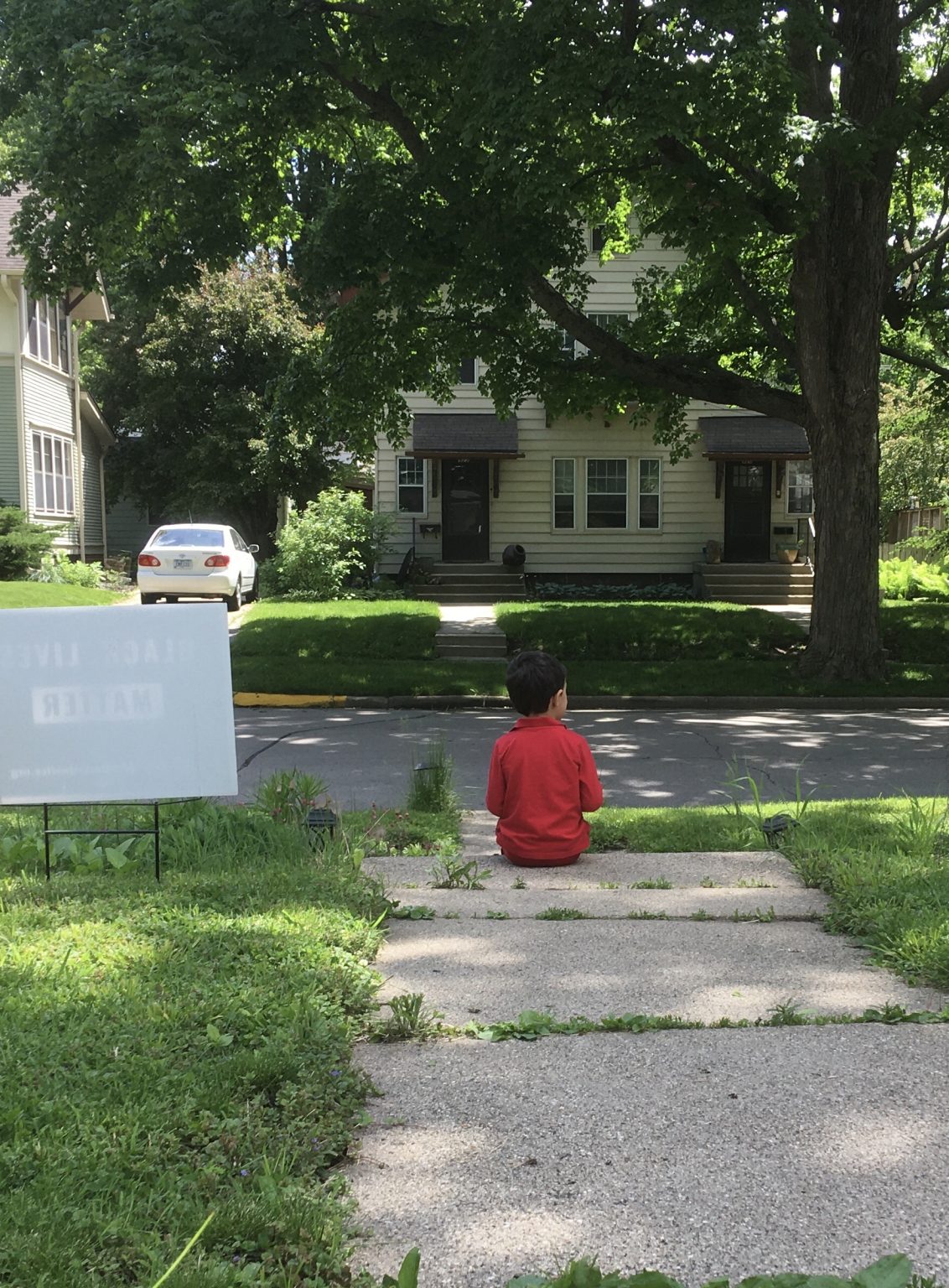
When choice is robbed from us, then the bedrock out of which our ethical behavior follows.
I am privileged to have the opportunity and space to walk or ride a bike with my 3-year old son, Malcolm, almost every morning. His glider bike is green and has no pedals making it especially useful for children just learning how to balance without having to simultaneously learn how to pedal. Malcolm’s use of the bike has been a game-changer for our morning walks, allowing my wife and I to walk at a faster pace – much appreciated after either pushing him in a stroller, carrying him in our arms, or having to do shorter walks.
On mornings when Malcolm and I are together without mom, it’s especially interesting to me to be in a position to create space for Malcolm to make choices, and to witness his sense of agency over his environment. When I genuinely provide him the opportunity to choose where we are going, I notice some shifts in me. I feel a sense of spaciousness inside and around the place where my heart is located. I feel a releasing of my abdominal muscles, perhaps associated with a dissolving of my own fears and anxieties of having to be in control of the situation.
With Malcolm I notice how easily and quickly he takes control of the situation, without hesitation. He knows where to go without me telling him. As a parent, I find this wonderfully liberating. I don’t have to tell my son what to do, or what to be interested in. He knows!
We come to the corner of the sidewalk, for example, and there is the choice for him to go right or straight. I realize, as the adult, I could easily take that choice from him by making the decision myself, or worse, by being unconscious that there is an opportunity to make a choice– that we could go left or straight.
As we come to the corner, I ask Malcolm, “Which way do you want to go, left or straight?” I give him just two choices of the myriads of possibilities. He could go right or back, or simply choose to stay still. Malcolm responds, “let’s go left daddy.” It’s so wonderful to hear him say this. I notice an increase of energy in my core as Malcolm leads the way. I notice my own concentration (based on a subjective feeling of focus in my forehead) increases as I let go of my desire to control my son.
Many would perhaps question that a child has the ability to make an informed choice, but having observed him myself in this process, it’s fascinating for me to watch as he makes decisions for himself, based on what he wants to do. It requires on my end that I remain open, with “don’t know mind”, and with goal-less-ness. For, if I’m the director, I teach him how to follow. If he learns how to make decisions for himself, with his own physical body and mind, then he learns how to be a leader.
I do not merely become his follower letting him do whatever he wants – that would be irresponsible. Rather, I become the facilitator of him developing a sense of agency over his environment – that he feels he has some ability to influence the world as he experiences it based on his decisions. I also prevent him, if need be, from destroying property or hurting other people – though instances of destruction have been rare in him and often are tied to the need on my part to pay greater attention to what he’s doing, and to engage with him more deeply.
This shard of experience leads me to wonder about the connection between the early childhood development of choice and living an ethical life. How might these two things be connected?
Regardless of your beliefs or lack thereof in the Abrahamic religious traditions, Judaism, Christianity, and Islam make freedom to choose the bedrock of living a life centered on or in God. All the stories in the Hebrew Bible, to my knowledge, point to the importance placed on choice, and choosing to live a life based in closeness with God – understood not as a perfect life, but a life of meaning and a sense of belonging to the world, to the human race, and to the divine with every atom of one’s existence, and a life of awareness of the sufferings of others and what to do about it.
The very first story in the Bible of human interaction with God – the story of Adam and Eve has been interpreted in a variety of ways. I invite my readers to keep their minds open and curious when re-reading this story because I feel it has very important things to say about our early childhood psychology as humans.
In the story God gives the first humans a choice. God tells them that they can eat from any of the trees except from the one in the center of the garden. Yet, at the same time, though God forbids eating from this tree, Adam and Eve are given the opportunity to choose whether or not to do that. In other words, God gives them permission to disobey. They have freewill.
Similarly, all human beings, from the very beginning, are endowed with freewill. If we look at this story from a psychological perspective, Adam and Eve prior to exiting the Garden of Eden are symbolic of humans in a pre-pubescent state, or maybe an adolescent state. Our ability to distinguish and choose right from wrong, from this perspective, is not something we are born with, but something that is developed over time, and cannot be shaped without the freedom to choose. We have to realize that we have choices. That we can make a choice isn’t often readily apparent to any of us, and we slowly discover this ability as we mature.
If it is true that the ability to choose needs to be realized (regardless of whether one chooses right or wrong), then as a caretaker of a 3-year old it is part of my responsibility to facilitate that learning, and it could be done with the most basic of tasks such as going for a walk and allowing Malcolm to exercise not only his legs, but his ability to choose.
From a Buddhist perspective, what role does choice play? I love the Kalama Sutra. In it the Buddha basically recommends checking things out for oneself, and making a decision based on your own experience, rather than what someone else says.
The Kalama Sutra was written for a community that had many different teachers of a variety of doctrines wandering through their town. The people became confused as to which teacher to follow. This scenario is very common in our present world. In times when we are inundated by so much information at our fingertips, how do we figure out which path to take? The Buddha’s advice in the Kalama Sutra is extraordinarily generous. He doesn’t say, “follow what I’m doing, and I forbid you from following anyone else.” He instead implores us to check things out and see through our own experience whether something is true or not. In other words, we have the power to choose how to live (even if we don’t think we do), and we can learn from our past experiences as opposed to someone simply telling us what to do or not do.
The Abrahamic faiths as well as Buddhism offer ethical guidelines for how to attain their respective goals – whether it be intimacy with God or Awakening. The Hebrew Bible talks about, among other things, Commandments. But just the word, “Commandment” can be problematic if we have not properly developed our ability to choose from an early age, prior to understanding right from wrong. The 10 Commandments are really an advanced kind of practice, in my view, once an understanding of choice has been well established. If choice has not been well established during youth, in other words if a young person is consistently denied opportunities to make choices, or even consistently given things that they would never choose, then that person will not be prepared to even consider living by the 10 Commandments. I think the same can be said of the Buddhist precepts. The flip side of this is that – considering that the mental factor of choice has not been well developed – then precepts or “commandments” will most likely be followed blindly without the ability to question them.
In modern times thanks to social media and the internet we can find so many examples of unethical behavior and there is an almost immediate condemnation of those behaviors. Without condoning unethical behavior, I would like to see us begin to uncover the roots of such behavior in adults. When we look at criminals in the justice system, for example, murderers, drug dealers, rapists, etc., who would not condemn their actions? Maybe they do need to serve time. However, what do we know about that person’s background? How were they treated by their adult caregivers? How were they treated by their community? Was there abuse or neglect involved? What about the role of generational trauma such as what the Black community has experienced, or indigenous peoples? Where is our responsibility for these traumas? In what ways may we have benefited, for example, from the oppression of Black people?
If we look at people of color, indigenous peoples, or anyone with early childhood trauma there may be a common thread: denial of choice – being forced to do something against one’s will. Black people did not choose to come to the United States. They came on slave ships. Indigenous peoples did not freely give over their lands to the white settlers. It was taken by force. No child chooses to be beaten or sexually exploited. These are examples of trauma that results from extreme lack of choice. While some notable individuals rise up out of these kinds of traumas, are able to pull themselves up by their bootstraps , how can we, as a society, expect people to act ethically if we don’t understand what a person or community has been through, nor our own complicity in this trauma?
When choice is robbed from us, then the bedrock out of which our ethical behavior follows, I believe, is seriously eroded.
We can learn to develop choice at any age, and in any moment. The concept of “No self”, which the Buddha taught has amazing ramifications for anyone who chooses to delve deeper into comprehending this concept. No self means that there is no continuity to the self, that runs from the present into the past. While we cannot deny that we have a birth and come from a particular blood lineage, no self is asking us to look deeper at this belief and to see that every moment we are born again. If we take this teaching to heart, then every moment is an opportunity to make a genuine choice in how to proceed. We need not fall into constrictive habit patterns.
While these opportunities to choose are available to us moment by moment, if one has not practiced making choices, or had choice robbed from them, then one’s ability to do so may have atrophied. This is why in my offerings of Trauma Sensitive Yoga, and in my attempts to make Zen more trauma informed, I make it a point to give people opportunities to make a new habit – that of making choices.
We often unconsciously judge behaviors as right or wrong without consideration for the bedrock making it possible to know right from wrong: the exercise of choice. Choice is not something that we learn when we are adults or teenagers. It’s something that we do from the moment we are born – or even before birth. Some might say even before conception – especially if you have an understanding of reincarnation. Regardless of our beliefs around when choice is available, we can test our beliefs in any moment. Using our own life in this moment as a laboratory, we can become more aware of the choices available to us, rather than settling for old habits. In our interactions with our family – those younger and older, we can offer them choices, try to better understand their preferences, and be willing to be a servant to them, without condoning or facilitating choices that may be harmful.
I admit that offering choices to adults – or those older than us – is challenging unless they are willing to learn or are already open to perspectives other than their own. I find it easier to work with children who are much more mentally malleable. They are our future, and we need a future of people who not only are able to make ethically solid choices, but are able to critique the status quo of our society and know that there are many ways to live with integrity.

I lost my father less than a year ago. I am who I am because he was who he was.
I lost my father less than a year ago. I am who I am because he was who he was. I could not be me without the example of my father. I feel for those who grew up without a father or lived with an abusive or neglectful one. This writing may not seem relevant to such folks, and for that, I apologize. In many ways, my father was an exemplar of fatherhood. He never once struck me and was slow to anger. He provided intellectual support throughout my schooling, particularly in math and science. He had a love of the material universe that he passed on to me, which I later developed as I integrated science with religion and spirituality. As a child, I thought my father knew everything about the world, and I mistakenly assumed that all fathers were like him in that regard. He took me to swim practice regularly and showed up at all of my major swim meets, playing an encouraging role throughout my childhood and into adulthood in both sports and education.
Though he is no longer with us on the material plane, he occasionally shows up in my dreams. He’s there with his warm blue eyes lovingly showering me with attention. How lucky am I?
When I entered the path of Zen Buddhism and began training as a priest, my father struggled to understand my decision because, in his world, there was no space for spiritual endeavors unless it led to a high-paying and respectable job. In my early 20s during my Zen training, I had to learn to let him go because I could see that his possessiveness of me and his expectations of who I ought to become were getting in the way of my own maturation process.
The Lotus Sutra helped me in this letting-go process, particularly the “Lifespan Chapter.” In it, a distinction appears between the historical Buddha, who lived some 2500 years ago, and the cosmic Buddha, who is always present in our lives, here and now. The sutra makes the point that even though the historical Buddha is gone, the cosmic Buddha is always present, and it is this cosmic Buddha that helps us to mature.
The Buddha shares a parable to make his point. He talks about the “good” physician who had unruly children that would not listen to him. He came back from a day’s work to find his kids had become delirious from improperly consuming medicine reserved for his patients. He quickly produced remedies for the delirium, but while some recovered, others were so delirious that they refused to take the remedy.
As a father, I sometimes have to face this dilemma. As parents, we find ourselves in the difficult situation of our guidance going unheeded and our children continuing with their bad behavior despite our warnings. In the parable, the good physician finds a way to cure his delirious children. He leaves home and goes to a foreign country, then sends word back to his family that he has died. In their regret for not listening, the children take the appropriate remedy and are then cured.
Sometimes, as a parent, we need to walk away from situations that are beyond our control. I don’t advise abandoning our young kids, but the story makes the strong point that sometimes love can be shown not through our presence but through our intentional absence. The Buddha goes on to describe himself like the good physician and even refers to himself as the “parent of the world.” In the same way as the physician, he needs to be absent for people to appreciate his presence; otherwise, his students grow arrogant. However, the Buddha appears to those who seek him with sincere hearts. Similarly, I have come to more deeply appreciate the role my father played in my life now that he is no longer here.
My own father struggled with allowing me to mature without his continual guidance, and I could see that thanks to the Lifespan Chapter of the Lotus Sutra. I felt compassion for him and was able to forgive him for that, and he later accepted my chosen path into adulthood.
The Abrahamic faiths sometimes refer to God as a Father because our spiritual maturation requires the falling away of earlier created concepts about God. A good father is there for us in our early development and gradually lets go as we grow. In the same way, in our early spiritual development, we might have very fixed ideas of who or what God is, but as we mature, have non-dual experiences of reality, and come to understand the way the world works, our earlier ideas of God naturally drop away. We come to understand God differently. God may even become absent, as it is for many who are atheist or agnostic. The “resurrection” of God also comes as we continue to mature on our spiritual path, but this resurrected God is not the same as the earlier concepts of God that we held. In this respect, the cosmic Buddha described in the Lotus Sutra is similar to the resurrected God found in the New Testament. My suggestion is not to take these stories found in the Bible or the Lotus Sutra literally. Rather, they can help us understand the psychological shift that takes place within us through the experience of non-duality, which Zen practice aims to foster.
The Buddha’s own father was the best example of what not to do. He kept his young son away from the realities of birth, old age, sickness, and death, and did everything in his power to prevent his son from seeking spiritual truth. He was shallow and spiritually immature. He couldn’t let go of his ideas of what his son ought to become. Too many fathers fall into this trap—seeing their offspring as extensions of themselves and controlling what their kids do. We need fathers who are present for their kids in their early years, who see fatherhood as a path to their own spiritual development—learning when to hold on and when to let go—and who allow their children to seek truth for themselves. This, I believe, is the message of Zen to fathers.
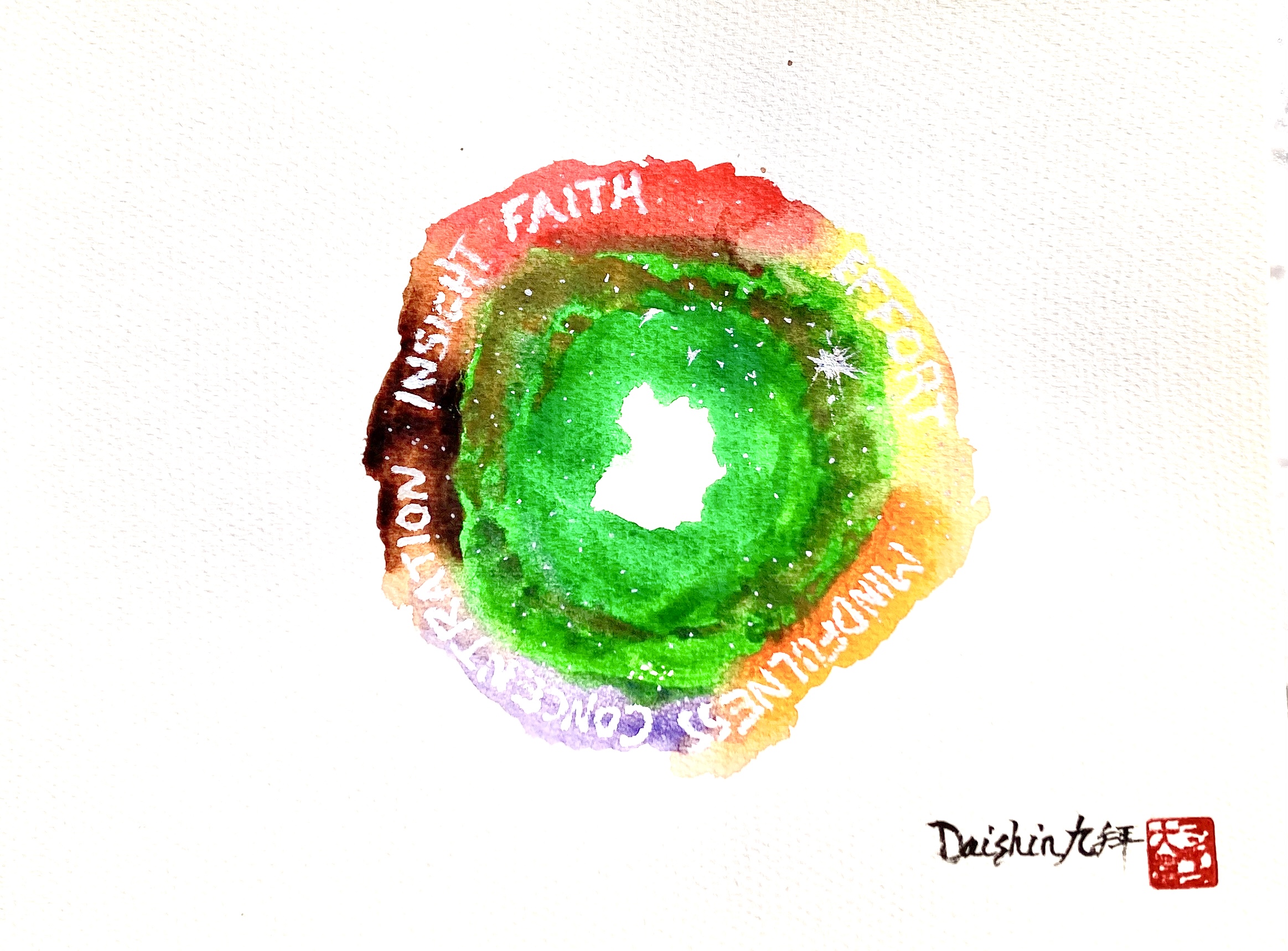
Ths article talks about what it means to have "faith" from a Buddhist perspective.
People of many religious traditions come together across the globe to celebrate the end of a year and to wish for a prosperous new year to come. There’s something in our psyche that acknowledges this ending and feels the need to mark it, formally or informally, with ritual. Christmas is that time for Christians, Kwanzaa for certain African American communities, and in Japan, people ring in the new year with 108 sounds of the great bonsho bell at the Buddhist temple.
For many people in our own Buddhist community there may be mixed feelings about some of these rituals. We have perhaps dismantled our ideas of God, faith, and organized religion. Some of us may even be struggling with a sense of purpose and belonging. Without a strong faith, some may wonder, why even bother investing energy in celebrating the close of the year?
Most of the people I know associate faith with religion and God. Many who come to Buddhism may have rejected their religion of origin and are trying to find some guidance in their newfound spirituality. Some may not want to give up on religion but do want to give up on God. This was the case for me and a lot of other Buddhists I know. I was drawn to Buddhism, in part, because the Zen teachers I connected with said nothing about God, about having to believe in God, or that God played any significant role in Buddhism.
Today I feel differently about God. As a chaplain, I pray with Christians and invoke the name of Jesus. I find many aspects of the Bible personally comforting and I can totally understand how many people, especially when they are sick, can likewise find wisdom, compassion and a deep sense of belonging by reading passages and connecting with their Christian community and pastors.
However, I benefited greatly, too, from letting go of having a relationship with God and associating God with religion, as well as deconstructing the concept of God. I distanced myself, intentionally, from people who practiced with conservative views of Christianity. While this helped me to define myself religiously, my teacher, upon conferring the 16 Bodhisattva precepts, gave me the name of “Daishin,” or “Great Faith.” I don’t think it was an accident that she did that. Having taken on the name “Faith” in part of my name has led me to investigate what that concept means within Buddhism. Does faith, in Buddhism, have anything to do with God? Do I put faith in Buddha instead? These were some initial questions I wrestled with.
First, the Chinese character for faith – 信 – literally means “one who stands by their words.” One who says what they are going to do and then does it, is one who can be trusted and relied upon by others. It calls to mind the importance of being careful about what we say before we say it, especially if we intend to do something that has implications for others. Another possible translation, one that may be even better, is “confidence.” Faith is not blind.
In one of the earliest Buddhist teachings, the Dhammapada, the Buddha mentions a word that has been translated as faith:
As a strong wind blows down a weak tree, Mara the Tempter overwhelms weak people who, eating too much and working too little, are caught in the frantic pursuit of pleasure. As the strongest wind cannot shake a mountain, Mara cannot shake those who are self-disciplined and full of faith. (Chapter 1: 7-8)
Here, faith does not appear to be directed at an object, such as God. Buddha doesn’t say, “Have faith in me.” So, what is faith in, if anything? Perhaps a better way to view faith from this perspective is that faith is a state that each of us is naturally endowed with. Like a tree, that it can be full and strong, it may be in a younger developmental stage, it may be in a state of decay, or it may be more mature. It doesn’t matter what stage it’s in. From a Buddhist perspective, faith is a seed that we all have within us. The Buddha encourages cultivating it, not for him but for our own well-being and healing.
A second place where faith shows up in Buddhist teachings is in the Buddhist psychological perspective called Abhidharma, or “super Dharma.” There is a wonderful teaching about “The Five Powers,” the first power being faith. Faith is the foundation for effort or energy. Energy is the second power. When we have a strong faith, it gives us energy. Why? Because we are living with a sense of purpose. To have faith is to know that we belong and that what we do matters. This gives us energy.
With energy, we have the ability to nourish mindfulness, the third power. We become aware of what’s happening within and around us and are better able to choose what to do and what to refrain from doing. Mindfulness leads to the fourth power – concentration. When we become clear through mindfulness, the mind is better able to concentrate on what’s important and to give it our full attention. We’re able to discern what we want to let go of, without regrets, and to pour ourselves more fully into the present moment.
Concentration, then, leads to insight, the fifth power. Insight or wisdom is that which allows us to see into the depths of reality and to know that there is more here than meets the eye. Insight further increases our faith, and thus the five powers run in a cycle, mutually enhancing (or diminishing) each other. These five powers are operating so quickly that we may not always be able to tell one from the other. The Buddhist psychological perspective, though, has teased the five powers out of a single stream of energy so we can understand what’s at play, kind of like a map. When we see the map, we are clearer on the direction we want to go.
Faith can also be found in later Buddhist writings such as The Awakening of Faith in the Mahayana, by Ashvagosha, considered one of our Indian Zen ancestors. The gist of this treatise is that in addition to putting our faith in the three treasures – Buddha, Dharma, and Sangha – we put it, first, in the Absolute dimension of reality. Buddhism teaches what’s known as the two truths – the Absolute and the Relative dimensions of reality. These two realities are always here and now in every moment, but we are rarely aware of the Absolute dimension unless we have some kind of disciplined spiritual practice that prepares us for experiencing it (or we spontaneously experience it).
To have faith in the Absolute dimension we need to know how to understand what it’s referring to. According to Ashvagosha, what he calls “Mind” is the concrete manifestation of the Absolute in the here and now. “Mind” is not referring to what we usually associate with mind – such as the mind/body duality, or mind versus matter. Rather, Mind is an all-pervading reality found in everything. It is that aspect of the universe that enlivens all things, allowing us to see the magnificence in something even as tiny as an atom. This Mind includes our individual minds, as well as the consciousness of other beings, but also embraces or infuses all material reality. It is sometimes referred to as Thusness. It is this Mind that we put our faith in.
Faith shows up in other Buddhist sutras as well, but the main idea of it is that it’s never a blind faith, but faith in our ability to see more deeply than what appears before us and faith in our ability (and others’ ability) to wake up completely to our Buddha nature – our inherent wisdom and compassion in relation to all things. This leads us and society to the end of suffering.
As my own family prepares for Christmas, I feel apprehension (or maybe it’s internal conflict) around celebrating the year end. I know that Christmas is tied to a religious narrative that is often dismissed or downplayed by the larger society. Families get together to exchange gifts not so much because we are motivated by that narrative, but by the commercialization of Christmas. We often lack understanding on what it means to give. We may be completely oblivious to what giving has to do with the baby Jesus and thus base our giving on what commercials or family tell us is appropriate.
This is exactly the time, however, that a Buddhist perspective on faith can potentially transform us, and even augment whatever spiritual or religious tradition we engage with to transition to the new year. By focusing our attention on the power of faith within us we get clearer about our value in and to the world. We also potentially inspire others to look for or deepen their own sense of purpose, regardless of religious beliefs. In addition to whatever we wrap in decorative paper, the gift of faith can be included. Moving into this year end, may all of us connect with faith in ourselves and others. May we not only overcome whatever obstacles are pressing in on us, but may we also live out of a sense of deeper liberation and compassion.

One way of bringing the Dharma to someone behind bars.
I recently received a letter from a man in prison requesting guidance on the Buddhist path. He didn’t have specific questions other than a request for help. His letter stated that he’d been in prison for seven months.
I can’t imagine the hardship of being pulled apart from my family, however dysfunctional it may be, and landing in a place of confinement that may not feel safe enough to mature, or understand the workings of my own karma. I’m sharing my response to the man who sought my advice here. You can consider it one possible way of working with this sort of situation. You might also find it helpful to consult Nebraska Zen Center sangha members who work with inmates at facilities in both Omaha and Lincoln.
As a practice, how can we think of the incarcerated with greater compassion? The United States imprisons more people per capita than any other nation in the world. And if we take Buddhist teachings seriously, then we know that concentrated suffering anywhere, even if it involves appropriate punishment for wrong actions, results in increased suffering for all of us. It is in our best interest, even if we are appalled by the past actions of the incarcerated, to educate and to help them find relief from suffering. Meditation is a powerful practice for all of us, maybe even more so for the incarcerated. Some of the best students are behind bars, as they lean on and listen more intently on every word you say.
As Zen practitioners we strive to be bodhisattvas, or awakening beings, who vow to awaken others before ourselves. Zen master Dogen, the thirteenth-century founder of our Soto Zen school, describes the Four Activities of a Bodhisattva as Giving, Kind Speech, Loving Action, and Cooperation. As you read through my letter to the man who requested my help you might recognize these four activities at play. Keep in mind, too, that the first person to read this letter will probably be a prison guard or facility worker whose job it is to review the content of all inmate communications. My letter is as much for that person as it is for the inmate.
If you are interested in helping out with this inmate, please contact me, Daishin.
Dear R.,
Thank you for reaching out to Zen Fields to request guidance and support from a Buddhist perspective. It’s during times of great hardship that we look to religion for guidance. All religions have something important to teach us, but we can’t always hear the message. So, if we can’t find wisdom in the religion of our birth, it doesn’t mean it’s not there, but that there may be some obstruction that stops us from receiving the message. What’s the message?
You are worthy of love, compassion, and forgiveness. You have access to unconditional love right now and always. Unconditional love means that you are worthy to receive love immediately regardless of your past mistakes.
Christians might put it like this: Jesus loves you now and always beyond your comprehension.
Buddhists might say it like this: Your value is not based on what you have done, or will do, or are doing now, but on your very existence. Every breath you take is a blessing from the universe.
I have included a piece of Japanese calligraphy. There is a famous Buddhist saying: “No mud, no lotus.” This means that just as the flower blooms thanks to the mud that it’s planted in:, so, too, Enlightenment and suffering are never apart from each other. Conditions don’t have to be your idea of perfect for you to grow spiritually. You just need to see the great opportunity you have right now for awakening.
Going forward, I recommend a daily meditation and prayer practice. Are there books or people you have access to that can help you to do that?
If so, learn as much as you can from them. Then, if you have questions that are more specific, don’t hesitate to share them with me. Meanwhile, learn how to meditate and pray. I don’t care what kind of religion you draw from to do that, so long as you come to peace in yourself.
May God and Buddha bless you always,
Daishin

Heaven and hell are here on Earth; seeing interbeing in zazen turns this world into heaven.
The Way Courses Through Heaven and Earth
A lot of people associate religion with beliefs about where you go when you die. Many (not all) Christians, for instance, link good deeds and belief in Jesus with a heavenly afterlife. But even those who are not Christian, those that don’t espouse any religion, relate religion to belief in an afterlife. The difference is that they don’t necessarily believe it, they simply connect religious beliefs – Christian or otherwise – to a heavenly abode. What follows is a response to the second group of people – the non-religious – as well as to those entertaining ideas about going deeper into Buddhism.
Zen Buddhism is not immune to such concerns about afterlife. There’s the belief that we’ll return to this life after we die, just in another form, such as an animal, a plant, or maybe a human. There’s also references to going to the Pure Land which is codified in our liturgical dedications.
The difference between the more common thoughts about heaven and what Zen teaches is impermanence. Heaven is not a permanent place. The Pure Land is not permanent. Attainment of a special enlightened state of mind, too, is not permanent. Zen asks us not to get stuck in one absolute location. With study of the Dharma and the practice of meditation with a sangha and teacher, we can find further refuge not simply in a life beyond this one, but in the three treasures – Buddha, Dharma, and Sangha.
It’s okay to die in practice. When my teacher, Daien Roshi, was training in Japan, she asked her teacher, Daito Roshi, “What if I die here in these mountains?” Daito Roshi’s response was, “Don’t worry. You see all these pine trees that surround us? They have a blight. There will be plenty of wood with which to burn your body. We’ll recite the Heart Sutra for you.”
In the early stages of practice we care more about our individual lives, and we’re less aware of the greater life systems that surround us. As our practice matures, however, we become more concerned about the life systems and less so about our individual life. It’s not that the individual is not important. It’s just that we come to see ourselves as inseparable from everything and everyone. What happens “out there” happens to me. We just can’t ignore this.
At the present time we’re in a situation where life on the planet is seriously threatened, primarily by human beings. If the planet’s life systems are threatened, then so are we, not as individuals only, but as a species – along with the many other species that have already gone extinct in the last 100 years. Yet in our ignorance we don’t see this connection.
The most important thing we can do right now is to view life with the eyes of “Interbeing.” Worry about the future doesn’t help. Acting from a foundation of our profound connectedness with life is essential. It starts by changing the way we individually see. We meditate until our mind changes. When it changes, we continue to meditate to nurture that view, like growing new grass or a tomato plant. If we don’t continue, we’ll forget this insight and it will wither.
Once we establish interbeing, we move our awareness to our family and do what we can to bring peace, harmony and love to our children and parents. This is not an easy task. It requires tremendous effort. But it’s worth it. Without the foundation of a strong and caring family, how can we enter our jobs and be truly effective? The way we treat our co-workers reflects the way we treat our children.
Finally, as we commit ourselves to changing our minds from self-centeredness to one of interbeing, and of extending our influence in a positive way to our family, we come into alignment with The Way. We further cultivate Trust that The Way will move us to positions in society where we can make a positive impact on our world around us. Our job may not be perfect, but we start to see it’s essential that we play our particular role, however humble it may be. When we get lost or start to burn out, we return to ourself and to zazen, reaffirming that view of interbeing.
My great grandmother was not a Buddhist. She was a devout Catholic that immigrated in the early 20th century to the United States from Alto Fonte in Sicily. But her views were very similar to those of Zen. She said, “Life is what we make of it right now. We can create heaven or hell right here on earth.”
She is in alignment with the prayer of Jesus who said – “Thy Kingdom come on Earth as it is in Heaven.” It’s also in alliance with the story of Zen Master Hakuin and the Samurai.
Hakuin was asked by a Samurai, “What is Heaven and what is Hell?”
Hakuin asked, “What do you do for a living?”
The samurai said, “I’m a general.”
Hakuin asked, “What idiot made you a general?! You look more like a butcher to me.”
The samurai’s face reddened, he drew his sword from his scabbard and was about to slice Hakuin in two when Hakuin pointed at his now purple and shaking face, “That’s Hell.”
The samurai had an instant of recognition of the teaching. He put his sword away, his face totally relaxed, and he bowed to Hakuin saying, “I understand. Please forgive me.”
Hakuin pointed to him and said, “That’s Heaven.”
Heaven can be found here on Earth, and when we align ourselves with the Way, starting with the insight of interbeing in zazen, then this world transforms into the Pure Land of the Buddha or the Kingdom of Heaven.
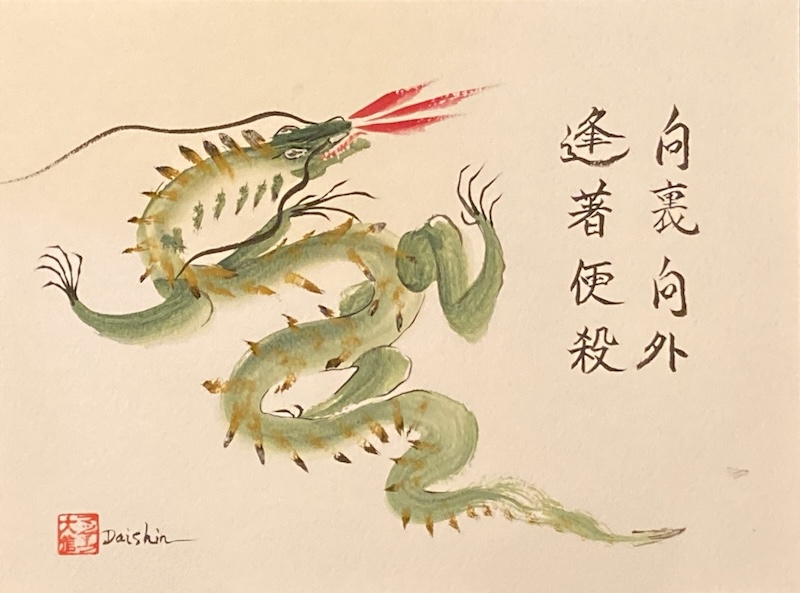
Shikantaza starts where the jhanas end: we sit as already awakened, with no stages to climb.

All art by Daishin

At the edge of a forest filled with immense banyan trees a man wearing ochre-dyed cloth draped over one shoulder, leaving the other bare, prepares a pile of mindfully gathered grass under large tree. Bending his knees to sit on the grass, he crosses his legs with great attention, placing his right foot on his left thigh and his left foot on his right thigh. His back lengthens like a cobra rising. He sits stably, like a thick and heavy stone, unmoved by howling wind, pounding rain, or swirling emotional hurricanes. His eyes half open not here nor somewhere else. His whole body seems to be covered with eyes. His face brightens as a subtle smile flowers forth. The mere sight of him is like gravity in the belly.
What did this man, known as the Buddha, or awakened one, experience while sitting in meditation? What were the meditative states that constituted his awakening? Some of his early teachings offer a clue.
I compare an early Buddhist text, “The Fruits of the Contemplative Life,” with Soto Zen teachings on Shikantaza, or “Just Sitting,” as I understand it. I attempt to show that ways of practicing and understanding Buddhist meditation (What was the Buddha experiencing under the tree?) have evolved over time. Earlier forms of meditation have become hidden in later teachings. Shikantaza is a unique practice within the Buddhist panoply of meditation practices that dispenses with earlier techniques, but at the same time assumes some of the “fruits of contemplative life” at the beginning of practice. In other words, these fruits of practice are not something practitioners of Shikantaza can anticipate. Rather, they are always present within Shikantaza from the very first time one practices.
It’s important to note that I have limited experience of Buddhist practice outside of Soto Zen. I speak from within my own tradition and mean no disrespect to other forms of Buddhism that may be more explicit about Jhanas or understand them differently. I’m especially grateful for earlier teachings of Buddha including how they manifest in what in modern times is known as Theravada Buddhism. What follows is not a critique of other schools of Buddhism, but simply an expression of my own finite understandings and musings based in experiences of shikantaza.
What did this man, known as “Buddha”, “awakened,” do while sitting in meditation? What did he experience in that profound state?
The Buddha lived for 80 odd years, over half of which he spent teaching the way to what came to be known as “Enlightenment.” Home leavers, wearing simple clothes, shaving their heads, sleeping under a canopy of trees, having cut family ties, having no job but to train for liberation of the heart/mind from this world of suffering, trading spiritual advice for food, clothing, and medicine, were attracted to him, and respectfully sought out his guidance. Far more of his students chose not to leave the comforts of a roof. They had their own families and jobs to tend. They too greatly benefited from his teachings, from simply witnessing him sitting, standing, and walking.
Kings, both wise and stupid, even, sought the guidance of Buddha. King Ajatasattu was such a person, plagued by fear and often acting with violence. He asked Buddha, as recounted in the Samannaphala Sutta (The Fruits of the Contemplative Life), about the fruits of meditation, what someone would gain from such a practice. Buddha graciously responded to the King with his own set of questions, and thus a dialogue ensued revealing the fruits of a life of renunciation.
King Ajatasattu was riddled with guilt and anxiety, having had his own father murdered so he could assume the throne. He encouraged divisiveness within the Buddha’s sangha by supporting Devadatta, a former disciple and cousin of the Buddha, who, like the King, was thirsty for power, even attempting (though failing) on three occasions to kill the Buddha. The price of the King’s rise to prominence was mental illness. In asking the Buddha for advice in spiritual matters he must have been experiencing bone-chilling regret and confusion, all affecting his internal peace.
Out of Ajatasattu’s dialogue with Buddha emerges a teaching that includes, among many things, descriptions of what are known as the four jhanas. The jhanas are the results of having generated mental stability through pratyahara, or withdrawal of the senses, having ended unwholesome qualities of mind like greed, hatred, and delusion, and having stilled “directed” thought. Having cultivated wholesome qualities of mind the practitioner experiences pleasure, rapture, joy, equanimity, and mindfulness, among other qualities.
Buddha describes the transition of the mind from delusion to Enlightenment and the practices that allow one to move through various jhanas. This must have been a very prized teaching in the 5th century BCE, in a worldview that proclaimed that escape from the round of suffering is possible, but only after many lifetimes of assiduous and dedicated practice.
A seismic change occurred with the emergence of the Lotus Sutra and other Mahayana texts between the first century BCE and the second century CE. The Mahayana texts are known for the radical proposition that liberation is available not only to monks who dedicate their lives to practicing meditation, but to everyone. No longer is there one Buddha–Shakyamuni, the historical Buddha who awakened under the Bodhi tree. Instead, there are many, including the solo practitioner who has no need for a teacher. In fact, the Buddha of the Lotus Sutra predicts that all of his disciples, male and female, are destined for buddhahood. He even guarantees enlightenment to those who doubt it’s possible.
Mahayana made enlightenment accessible to lay people, including:
The Lotus Sutra was a radical exposition then, and I think it remains so today. From the time of the historical Buddha to the present, the Dharma has been flowing like a river, its waters turning and churning as it emptied into the forest and city geographies of East and Southeast Asia, and crossed the Pacific Ocean entering North and South America.
Mahayana Sutras set the stage for shikantaza, a practice that may appear at odds with earlier forms of Buddhism that emphasized cultivation from an unenlightened state to an enlightened state.
Chan (Chinese for “Zen”) Buddhism, which developed in China in the sixth century CE, deepens the accessibility of Mahayana teachings to everyone by introducing the idea of “sudden and gradual enlightenment” . One no longer needs to wait lifetime after lifetime for liberation, as in the time of Shakyamuni Buddha. Instead, one can catch glimpses of liberation in one’s own lifetime. Freedom from the round of rebirth and suffering is possible here and now, in this very life, regardless of one’s previous lives.
The jhanas, as described in the “The Fruits of the Contemplative Life,” are the product of a different mindset, one that takes reincarnation for granted. Unlike modern America with its secular leanings, ancient India presumed a universe where we are continually reborn into a world of suffering until we have the means to escape this world (referred to as Nirvana) through meditative practices. This escape was only afforded to those who could renounce the world and become monks. According to “The Fruits of the Contemplative Life,” states of deep meditative absorption can be experienced in the here and now through exertion. However, unless one becomes a monk and dedicates oneself unremittingly to meditation, they are largely unattainable. A twenty-first century American reading the “The Fruits of the Contemplative Life” might get the impression that such lofty states require a great deal of time, patience, and, perhaps, instruction from a teacher regarding proper technique that could be experienced in this life. However, they may not be aware that it was written for someone who had lifetimes of practice and previous incarnations before they attempted such practices.
The practice of shikantaza, or “just sitting,” developed within a Chan context, and derived from a confluence of cultures, ideas, worldviews, and habits of the heart. While the idea of reincarnation was imported to Japan, this idea doesn’t play a big role in who could practice. Moreover, there’s no mention of the jhanas or how to reach them in Dogen’s Fukanzazengi, or “Universal Instructions for Zen Meditation,” written in the thirteenth century. Where did they go? How does one “attain” them?
The following story found in the Denkoroku, or Transmission of Light, a collection of koans attributed to the thirteenth-century Zen master Keizan, is instructive:
Seigen Gyoshi went to study with the Zen master Daikan Eno and asked, “What work is to be done so as not to fall into stages?” The Zen master inquired, “What have you done?” Seigen Gyoshi said, “I do not even practice the holy truths.” The Zen master said, “What stage do you fall into?” Seigen Gyoshi said, “If I do not even practice the holy truths what stages are there? The Zen master recognized his profound capacity.
Both ancient and modern Soto Zen teachers discourage practitioners of shikantaza from actively pursuing special states of mind such as those described by the jhanas. Seeking them generates separation or clinging and obscures awareness of anuttara samyak sambodhi, or complete perfect enlightenment. Rather, Soto Zen encourages becoming less concerned with a release from the world of suffering, and more concerned with identifying oneself as the very world one lives in.
Soto Zen says, “stop grasping after anything, good or bad,” for to push away the bad only makes it worse. Rather, learn from the wave. Water rushes backward to go forward. Bad and good are two sides of one coin: delusion and enlightenment can’t be separated. Enlightenment can only be found within the deluded mind, not once all delusions disappear.
Zen Master Dogen used images to help the practitioner compassionately meet the mind that wants to eliminate delusion. In Universal Instructions for Zazen, for example, Dogen says“[t]he dragon attains water” and “the tiger returns to the mountain” . The dragon, a mythical beast of great power and wisdom, dwells in water—that’s its home. But the dragon also dwells within us. The tiger’s home is the mountain. That tiger, too, is within us. Shikantaza is the practice of returning, or rotating, the mind to something (not a place or state) that has never left us. When the dragon attains the water and the tiger enters the mountain it is in its natural environment – it knows where its family is, and where to find things.
In my experience, people often take a “pauper to a king or queen” approach to meditation. They devalue their present state of mind, like King Ajatasattu in “The Fruits of Contemplative Life” (and who could blame him for wanting to feel differently?), and are seeking something grander – the mind of a Buddha, an “enlightened” mind. They might work their way through various mental states and after many hard years of practice begin to get some glimpses of so-called “Buddha Mind.” They may equate this “Buddha Mind” with some kind of privileged status, and if they attain it may even gain some recognition from their teachers or others in their meditation community.
Shikantaza practice within mainstream Soto Zen takes a slightly different approach. From the very first moment of meditation, we are kings and queens: we manifest Buddha Mind simply by sitting upright on our cushions. Indeed, Dogen Zenji says, “Shu sho ichi nyo”: practice and enlightenment are one.
In shikantaza, we embrace whatever arises, so there’s no difference between the person who meditates for the first time, and the person who has been meditating regularly for 30 years. It’s not that people immediately experience the same psychological state when they practice shikantaza, but that whatever is present is given permission to be there. The person who has been at it longer only sees this more clearly than the person who’s just begun.
I find several similarities between the Buddha’s instructions to King Ajatasattu in “The Fruits of the Contemplative Life” and Dogen Zenji’s, Universal Instructions for Zazen. After introducing zazen as the practice of a Buddha, Dogen offers practical instructions for how to do it. First, he says, find a quiet room. Eat and drink moderately, and put aside all involvement with the world. To me, this mirrors the Buddha’s description in “The Fruits of the Contemplative Life” of the home leaver who abandons worldly attachments and eats just one meal a day. Dogen, however, makes shikantaza accessible to everyone by advising practitioners to “eat moderately” instead. Watch the quantity of food you put in your body so you can remain alert in meditation. You can have three meals a day, just eat in moderation.
Moreover, during the span of meditation practice—whether we are sitting for five minutes or 45 minutes, Dogen exhorts us to put aside worries about the day. Dogen was not opposed to cutting off ties to the world as the monks of the Buddha’s time did, but he also thought in terms of one meditation period. He encouraged practitioners to cut off worldly ties for however long they were meditating—five minutes, five hours, five days, five years, or a lifetime. Practice and enlightenment are always available immediately; there’s no need to wait for some special time. All of us, home leavers or not, can set aside five or ten minutes from our busy lives once or twice a day to let go of worldly attachments.
Buddha, in the “The Fruits of the Contemplative Life”, describes the ending of “directed” thought as responsible for the emergence of a particular jhana. But ending directed thought, in my view, is not the same as stopping thought altogether. When the Buddha speaks of “directed” thought, he means concentrated thought: focusing one’s mind on a particular object, and not losing that focus. People new to meditation often mistakenly think that the goal is to fix one’s mind so thoroughly on the breath that no thoughts whatsoever can penetrate the mind. While this might have some benefit and is not a necessarily a bad practice, it can be very misleading. Often I hear people express their failure at meditating because of this misunderstanding this practice.
When the Buddha instructs King Ajatasattu that one of the jhanas is the result of stilling directed thought, I believe he is describing the practice of allowing “undirected” thought—and this, in my experience, is exactly what shikantaza is about. In shikantaza we don’t try to fixate on a particular object, such as our breathing, or try to rid our minds of thought. Instead, we view our thoughts like a flowing river. Good and bad thoughts pass us by. There’s no need to hold on to the good ones or the bad ones. We just sit as if on on the bank of a river and watch the thoughts rush by. Practicing this way, the meditator may notice changes to the mind and may even experience feelings of mental ease. But ease of mind is only a possiblity; it is not a guarantee, and it is certainly not the “goal” of meditation practice.
Another point of convergence I found between the Buddha’s descriptions of the jhanas in “The Fruits of the Contemplative Life” and Dogen’s “Universal Instructions for Zazen” is the quality of joy that meditation can elicit. The Buddha says that joy is one aspect of the first of the four jhanas. The practitioner who reaches this state of meditative absorption will experience “rapture and pleasure born from withdrawal.” Similarly, Dogen Zenji describes shikantaza as anraku no ho mon—“the dharma gate of joy and ease.”
Joy ought to be present in our own practice as well. It arises from temporarily but responsibly turning our minds away from our incessant worries and desires.–We constantly want more: more money, more stuff, more attention, more sex. There’s no shame in mindfully observing these desires in ourselves. The problem happens when we are not aware of how destructive these desires are for our own lives as well as our planet when actively pursuing them.
The jhanas Buddha describes in “The Fruits of the Contemplative Life” are stages—states of concentration that one passes through on the way to enlightenment. For Dogen, practice begins at Buddha’s finish line: we practice as if we are already awakened beings—because we are! No former practice is necessary; there’s only now. Dogen invites us to trust in our own inherent Buddha nature, something our rapacious minds delude us into thinking we have lost. Shikantaza can be considered a non-dual approach to meditation that moves us, similar to the jhanas, from deluded humans to Enlightened Buddhas.
Two other areas of overlap between “The Fruits of the Contemplative Life” and Dogen’s shikantaza are the practice of confession and of the precepts. While, I will leave these for a later writing, it’s important to note that confession and the practice of the precepts are a common thread that runs through all forms of Buddhism, both in ancient and modern times. While in modern times meditation has become accessible to everyone, and one can experience liberation here and now, we cannot presume that we are above the need to confess our short-comings nor to practice the precepts.
On the surface there appears to be a great gap between shikantaza and earlier teachings of the Buddha. No doubt, shikantaza is not practiced in the linear fashion that “The Fruits of Contemplative Life” describes the jhanas. Because shikantaza doesn’t mention the jhanas, however, doesn’t mean they are not present in shikantaza. We see Dogen Zenji advocating for following the precepts, confessing, and leaving the world behind (even temporarily), just as Buddha either directly or indirectly supports in “The Fruits of the Contemplative Life.” While Dogen Zenji employs images like “the dragon attaining the water”, Buddha offers a more matter of fact approach – “if you do this, that will happen.” If you let go of worldly affairs, joy – the first jhana – will arise in the mind.
Lastly, the contrast between the Buddha’s approach and Dogen Zenji’s approach demonstrate the adaptability and flexibility of Buddhism across time and culture in meeting the needs of people where they are. Buddhism is not a monolithic tradition. There’s room for diversity of beliefs and practices, and we see that diversity fits well with the American mindset in the United States in the 21st century.