Here you’ll find reflections, teachings, and writing from the Zen Fields sangha, gathered over the years. Topics range from meditation and Buddhist philosophy to parenting, yoga, social and ecological justice, interfaith connection, and the places where Buddhism meets science. Browse by category below, or start with the most recent post and follow what draws you in.

Integrating the spiritual element into trauma informed yoga practice.
The Bhagavad Gita is one of the world’s greatest philosophical texts. We don’t know exactly when it was committed to writing, but some say around the 1st century of the current era, roughly 2000 years ago. It’s couched within the longest epic poem the world has known, the Mahabharata. The Bhagavad Gita, or the “Song of the Lord,” is recited daily by devout practitioners within the yogic tradition, with the aim of seeking truth or understanding about what one’s role is in life, and how to accomplish one’s goals.
The story is about a war that took place within an Indian family many centuries ago. The hero of the story, Arjuna, must fight alongside his four brothers, to put down their kinsmen – their cousins and uncles – to regain not just their material possessions, but the integrity of the family.
This war is symbolic of the war that each of us, today, must fight daily. It’s not necessarily a war with another country or within our country, but a fight with our own ego. Like the hero in the Bhagavad Gita, we struggle with the part of our self that tries to get us to give up on the challenges which we face. We struggle, for instance, to maintain our health through daily exercise and proper diet. We struggle sometimes to go to our job, perhaps because we don’t feel a sense of purpose or worth. Or we struggle to continue to learn because we fall into the trap of thinking we understand everything about how the world works.
Arjuna has this same struggle. It’s an ancient struggle of humanity. Arjuna is dejected and is ready to give up the fight and makes all kinds of excuses as to why he should put down his arms. His attendant, the God Vishnu in the human form of Krishna, advises him otherwise and explains to him the importance of carrying out his duties as a warrior to fulfill his destiny.
It may sound strange to westerner’s ears that we have been put here on this earth to carry out a mission. Certainly, we are told, we have so many choices available to us. But, while there are these myriads of possibilities presented, there’s only one thing we need to concern ourselves with, and it has to do with what we are doing at this moment. Our problem is that we are not focused and not in this moment. Our body is here, but our mind is somewhere else – either in the future or the past, or perhaps daydreaming.
The Bhagavad Gita gives us advice on how to return fully to the present moment to do what we need to do. Krishna, in the chapter on the “Yoga of Action,” offers the following sage advice:
· It’s better to do your own job poorly than someone else’s job well. (3.35)
· We can’t escape having to act by remaining secluded in meditation. (3.4 – 3.6)
· We need to learn to control our senses to accomplish our mission. (3.7)
· Perform our work without any attachments, and without thinking of the benefits or gains for ourselves. (3.9, 3.19, 3.25)
The key to doing any action is through controlling our senses, and we can understand better how our body and mind work through awareness of Krishna’s schema of what the whole person is comprised of. In this particular schema (there are other schemas he uses, and this is just one of them) he says there are five aspects to a human:
· The body
· The senses
· The mind
· The discriminating intellect
· The Atman
These five are in a hierarchical relationship to each other. The Bhagavad Gita reads:
The senses are stronger than the body. The mind is stronger than the senses; the discriminating intellect is stronger than mind; and Atman is above the intellect. (3.42)
In hatha yoga, we work with all five of these dimensions simultaneously. Our body is the most obvious of these elements, and contains our arms, legs, neck, shoulders, spine, head, as well as our internal organs. When we think of yoga in the west, we generally think of the physical, bodily practices, and of improving our body’s health.
However, in Yogic philosophy, body and mind are not two separate things as we often imagine them to be. Though there is a hierarchical relationship with the above five factors listed, when we act on any one of the five, it effects all the others. We use our senses, our eyes, for example, for balancing asanas like “tree.” We use our mind, the third aspect, to become aware of our body and how we are feeling in the various forms our body takes. When awareness is established, we can use our discriminating intellect – our ability to make choices – to help us decide what to do with our body, whether to extend our arms further, or to move them back, for example, in a forward fold.
In Trauma Sensitive Yoga (TCTSY), the discriminating intellect is what we develop when we make choices with our body. For survivors of early childhood trauma, this factor, the ability to discriminate between what we want and what we don’t want to do with your body, may be compromised or under-utilized. TCTSY calls our attention to the power we have within us to choose what we want to do with our body. This can have repercussions, of course, in our daily life, as we go about with myriads of moments in which we are confronted with a panoply of choices – such as which of the 1000 cereals to purchase at the supermarket.
Most of us are not aware of our power to choose, or even that every moment contains choice, and so we go about our daily life stuck in unconscious routines and habits, doing things because that’s the way we’ve always done them. There is a certain feeling of safety and comfort in the familiarity of our actions. We may not have a lot of motivation to change that which we are comfortable with, especially if we feel safe in those familiar actions.
The problem with this way of living is that safety is not reality, and we know this (perhaps unconsciously) on some deep level within us. Our wish to remain forever in a feeling of security deadens our sense of vitality to a certain degree. When we become awake to our ability to choose, however, our life starts to shift. We may feel at a crossroads between continuing on the way we have been, a way that is safe but not really alive on the one hand, and entering the unknown on the other hand. By consciously making decisions we disrupt a narrative we tell ourselves that says, “nothing about my life is going to change.”
In TCTSY we are encouraged to become curious about our felt experience, and then to choose from among a couple of options of how to hold our body. In this way we are developing both our mind – our ability to be aware – and our discriminating intellect – our ability to decide what to do next. This all happens by drawing awareness to our senses – eyes, ears, nose, etc. – and our physical body.
The fifth aspect, Atman, is a little more complex to understand. In Indian philosophy it has to do with the part of us that takes on different forms from one life to the next. Now we’re in a human form, but in a previous life we may have been an animal or a plant. In the next life we may be something else. Most westerners that I practice with don’t necessarily believe in reincarnation, or that our soul transmigrates from one body to the next. If they do believe in it, it doesn’t play a central or explicit role in their practice, and for the sake of TCTSY it’s not necessary to believe in reincarnation.
Another more scientific way to think about Atman, then, is as memory. There is a part of us, not just located in our brain, but in every fiber of our being, that remembers all our past experiences, and continues to get transmitted from one moment to the next. On a biological level we see this happening with DNA. DNA carries memory not just of what’s happening in our own life, but also in that of our ancestors. DNA is passed on to us through our parents, and so their experiences are also in us. What’s happened to our parents and their parents is part of the fiber of who we are. If our parents and grandparents experienced racism, for example and their parents and grandparents experienced slavery, that is also in our DNA in our present life.
In other words, all of our ancestors’ experiences, both the good and the bad, including trauma, get carried in our body whether we are aware of it or not. If we are not aware of this, then we can be acting out of past circumstances that no longer exist in our present life. Thus, we are often using coping skills that were relevant to our ancestors, but no longer relevant to us.
When we are practicing TCTSY we may get in touch with the trauma rooted in our physical body. We might see that the way that we act is like the way our parents acted, and that we’re no longer in the same boat as our parents were. There may be certain traits in us that got passed down from our unknown ancestors, yet they are also within us. TCTSY gives us the opportunity to become aware of how we are holding our body so that we can choose what makes the most sense to us now.
While doing TCTSY we don’t have to draw a conscious connection between what we do with our body and the experiences of our ancestors. Nor do we need to understand that connection or articulate it with words. All we need to do is focus on our physical body, on sensation. However, because our body, from a yogic perspective, also contains the other four aspects of senses, mind, discriminating intellect, and Atman, they are all influenced by what we do with our body.
Arjuna, like all of us, gets stuck in not desiring to act for the sake of his mission, what he was born here to do. The feeling of having a sense of purpose may feel foreign to us. But what might it feel like to have a sense of purpose in life? Is that not empowering? The message of the Bhagavad Gita and of TCTSY is that we have within us what we need to change our lives, to heal our lives, and to accomplish our goals – whatever they may be.

Fear for me is being asked by my wife to take care of our two-year old son, Malcolm, by myself.
Fear for me is being asked by my wife to take care of our two-year old son, Malcolm, by myself. I feel terrified by the prospects of inadequately responding to his unease or crying. I have a heightened awareness of being judged as a terrible parent. It has often been the case that, when I’m with him, I feel helpless to change anything, no matter what I try to do.
There is a story of the Buddha walking down the road where there was a vicious criminal and being told by the townspeople not to go down that way. Angulimala, the murderer, was looking for his next victim. When he saw the Buddha and approached him, Angulimala demanded that he stop. But the Buddha just kept on walking. Angulimala ran after him again yelling, “STOP!”

Buddha responded coolly, “Angulimala, I have stopped long ago. It is you who have not stopped.” The Buddha was pointing out Angulimala’s inability to stop the destruction of life. Angulimala miraculously recognized the error of his ways, bowed to the Buddha, threw away his sword, and asked to take refuge in the Three Treasures.
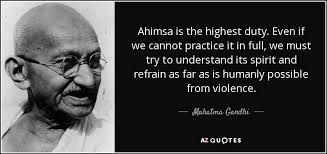
As I reflect on this story, I’m reminded of a line from the Yoga Sutras, “To one firmly established in non-harming (Ahimsa), all hostilities cease.” It’s not just the Buddha’s words that stopped Angulimala, but his presence.
I’m not the Buddha, and I don’t know if I could have the same presence of mind to stop a murderer. However, the genius of the Dharma is its universal application. We can apply it right now in whatever the circumstances we are in.
Every morning I practice meditation. I face the wall and follow my breath. Recently, my wife went out for a run and asked me to be attentive to Malcolm’s needs, which, of course, I obliged. When he awoke I was still sitting in meditation. In that moment, I had to make a decision about what to do. Should I go to him or have him come to me? On this day, I decided I would let him come to me. Being still, I was actually facing my fear. My thoughts went from, “I should run to him and try to make him feel all right,” to, “he’s okay as he is, there is no need to comfort him right now.”
Malcolm went looking for his mother, as is usually the case. When he could not find her, I noticed the anxiety in myself and stayed with it, watching it, breathing with it, focusing more closely on my breath. Malcolm then found me and asked me where his mother was. I told him that she was on a run and that she’d be back soon. Rather than trying to comfort him – as I could sense he felt agitated about this situation – I decided to just follow my breath closely and calm my own mind.
He came closer, and the closer he got the more he chilled out until he was simply leaning up against me. I was enjoying his presence and he mine, and we just stayed there for several minutes breathing together. Instead of reacting with actions that could have caused negative actions from Malcolm, my calm response elicited a calm and peace in him.
This saying from the Yoga Sutras, “To one firmly established in Ahimsa all hostilities cease,” has been increasingly on my mind since that experience. I’m by no means always feeling non-reactive, but I am inspired by how Malcolm responded to me, and by the practicality of this teaching. The practice of Ahimsa is not limited to the Buddha but can be realized by any of us in our daily lives and responses, such as dealing with a crying child, with an irrational family member, or just simply with our own mind. Can we see the universality and timelessness of this particular teaching?
The world tells us to hide from our fears, as symbolized by the people in the town warning the Buddha not to go in the direction of Angulimala. However, our practice is about facing our fears. Our fears lead us to deeper practice and understanding. Being afraid is not a sign of failure or weakness, but a natural and important ingredient for spiritual transformation. When our fears meet practice, there is potential for growth, as symbolized by the Buddha moving toward Angulimala.
Zazen is already perfect, yet eight life habits, from food to play, help us sit more fully.

"You are perfect as you are, and there's plenty of room for improvement."
Shunryu Suzuki Roshi
I hate thinking about what I need to do to improve myself, because there’s too much to do! I’d rather focus on zazen and the teaching that practice and Enlightenment are one, that when I sit and meditate, I am Buddha. Or that when I sit zazen all the precepts are held perfectly. In other words, in sitting zazen, no ethical mistake can be made.
Zen also teaches that the experience of the person doing meditation for thirty years is no different from a person who just started practicing meditation. In other words, there’s no gain to be found in practicing zazen. Zazen affirms that we are perfect just as we are, and the more that we sit and meditate, the more we can see the truth in that.
But Zen practice doesn’t let us rest in our innate perfection. Moreover, we often don’t “feel” like we’re perfect. For those of us who have studied the Buddhist precepts, we know how difficult they are to live by. If you study at a Zen temple, there are all sorts of practices that you’ll be introduced to that demand study, learning, and mastery. This includes such mundane activities as washing the face before morning meditation, brushing the teeth, and using special bowls for eating meals. The quality with which we practice the precepts and these other daily activities in our life will influence the quality of our meditation practice.
At Its heart, Zen is about self-cultivation, about getting better about how we do anything. It’s about taking the best care possible of what we’ve been gifted. It’s about improving our functioning in the world we live in. When it comes to zazen, it’s about taking good care of our posture, and not attaching to anything.
If we want to grow a garden, we can’t just “do nothing” in an absent-minded sort of way. We need to think about the seeds we want to plant, where we want to plant them, how we are going to plant them, and then how we are going to take care of them once planted. Zen practice is no different than growing a garden.
My Zen teacher did not say, “just sit there.” She gave detailed instructions of how to comport my back, legs, arms, hands, fingers, eyes, and tongue. She gave instructions on what to do with my mind. “You can enjoy your sitting. You can enjoy your breathing. You can enjoy your life.” These were her instructions, as transmitted to her by her teachers. This is Mahakashapa’s subtle smile. However, if we do an intensive meditation retreat (sesshin) we might question whether we can actually enjoy our practice, especially when our back is in pain, our legs are sore, and we just want to go to sleep. The point of sesshin, though, is to turn our mind towards the reality of our life so that we can wake up to what really matters.
For many people who come to meditation practice, though, the instructions on what to do with your body and mind are not enough because we are imbedded in social networks and a culture that influences how we feel in our body and mind, how we perceive the body/mind, and how our perceptions influence what is perceived. We can’t expect the Zen center or our practice to unilaterally affect change in us without simultaneously working on other fronts of our life.
What follows are points that I have found through my own personal experience to have helped me not just optimize shikantaza (seated meditation), but to live an overall better life. I say this with the caveat that these are points that I have found to help, and I would encourage my reader to explore these points for themselves and see if they work for you. These points are not made to shame anyone for not doing enough, but to inspire you to look for ways to do more to lessen the suffering in your life and to increase your overall sense of well-being, as that is the heart of the Buddha’s message to humanity.
Furthermore, keeping these points in mind does not guarantee success in perfect health and happiness. They are guidelines, and as our life continually changes, we need to reexamine our present habits from time to time to make sure they are realistic for where we are. There is a dynamic balance we all need to keep in mind, and the relative attention given to these points should change depending on circumstances.
The Points are:
Discussing such subjects is dangerous. Merely thinking about exercise and nutrition induce shame in many of us. So, please take what I write with a grain of salt and do the best you can within your own circumstances. This writing is only to encourage a “beginner’s mind” with regards to a subject that is repeated all too often in other contexts.
We’ve heard the need to pay attention to these things by our doctors and by society at large, but so many of us fail miserably at them, as attested by an epidemic of obesity. We might feel that we don’t have enough money or time to eat well and to exercise. But if we really begin to pay attention to the present moment, we’ll see that we can find many ways of exercising that don’t require us to go to a fancy gym, and many ways to eat that don’t require purchase of expensive organic foods. For Zen practice, exercise and nutrition are an integral part to the way one lives in a temple, not something extra that we need to make time for. Learning how to integrate exercise without separating it out from the rest of our life is key. The same is true of nutrition. When it comes to nutrition, I won’t be talking too much about what to eat, as important as that is. I will, however, discuss how to eat, based on the teachings of Zen Master Dogen.
My own teacher, Dai-En Roshi, was formerly a professional classical ballet dancer. She has a deep appreciation for the body, and was enamored by the way she and others move through space on stage and in front of an audience as a ballet professional. Until her mid-thirties she danced regularly, practicing several hours a day. Her lifestyle dramatically changed soon after becoming a nun, yet she brought mindfulness of the body, as learned in ballet, into action in monastic life. When I first met her, I will never forget how she comported herself, particularly her spine, and the way I felt in her presence. Her effortless attention to the detailed movements of her body when bowing and when walking, as well as when sitting to meditate, was a sight to behold, like witnessing the Buddha on the verge of attaining Enlightenment under the Bodhi tree. She was 100% present to her environment.
She lived to dance. Her job allowed her to do what she loved. She prioritized dancing and didn’t let anyone distract her from that love. As a thirteen year old, her parents tried to dissuade her from becoming a dancer, and they contrived a plan to do so by their minister. One Sunday the minister told the congregation that, “dancers go to hell.” When Dai-En Roshi heard this she never returned to the church again. Though her parents wouldn’t pay for her lessons, she found ways to earn money so that she could dance.
This may be an extreme example of taking care of the body through exercise, but I share it to inspire us to not make excuses. Where there is a will, there is a way. If the will is not there, we won’t do it. Exercise, and all of the 8 points for that matter, needs to have a deep-seated desire at its foundation.
Dai-En Roshi’s teacher, Noda Daito Roshi, also had a very body-based approach to Zen. He practiced shorinji kenpo, a Japanese form of kung fu. He played taiko drums and encouraged the formation of Taiko groups. Taiko drumming is physically oriented and requires not just muscle strength, but also cardiovascular effort. Moreover, Daito Roshi has a multi-acre garden on the temple grounds that grows all sorts of vegetables. He once told me that they rarely go out to eat, and that if someone wants to eat something at his temple they need to go out to the garden, pick a vegetable and cook it up themselves. There’s a saying in Zen, “A day without work is a day without food.”
If you were to visit a Japanese training temple you would probably not see monks doing meditation unless you arrived well before dawn. You would probably witness them doing physical activities such as cleaning and cooking or bowing. This video of Sojiji, one of two Head temples of Soto Zen in Japan, gives examples of the life of Zen monks.
But most people reading this will probably never have an opportunity to train like a monk in a temple. Therefore, exercise needs to be fun, age-appropriate, and sensitive to one’s health history or any limiting conditions, otherwise it won’t be long lasting. What is it that helps you move your body in a way that is enjoyable? Dancing? Running? Swimming? Volleyball? Making the time each day for some form of vigorous movement – for most adults that’s a minimum of 20 minutes – can release loads of pent-up energy, a consequence of our already sedentary society, not to mention the discharge of the endorphin dopamine that gives us that feeling of a natural high.
Historically, monks and nuns walked great distances before sitting down to meditate. They were physically active. Monks in Japan spend a good deal of their days cleaning – scrubbing floors, digging ditches and other manual labor.
In 1994, before the advent of the internet, I had been swimming almost daily for several years. When I learned there was a meditation teacher nearby, I walked to the place she was and then I sat down. My point is that today, we find meditation by sitting down and looking at a flat screen. We don’t have to move our bodies to learn anything. We read some words and our bodies are left out of the equation, as if what we do with them prior to meditation is irrelevant.
It’s thanks to the fact that I was physically active not only immediately prior to my first meditation experience, but that I had been swimming daily for years that allowed me to sit with a certain degree of stillness.
I encourage whenever possible a moderate degree of exercise prior to a period of sitting. Meditation practice can be, if one so desires, incorporated into one’s exercise routine, perhaps just five minutes at the end of exercise, and to cool down. Meditation can be a way to down regulate one’s emotional state especially after stimulating the sympathetic nervous system through exercise. In this way the sympathetic and parasympathetic nervous systems come into balance.
“We are what we eat.” This cliché is often invoked but seldom understood, because if it was, people would look more closely at the relationship between food and mood. While I’m not advocating for becoming vegetarian, we can’t expect to eat a half a pound of beef and then sit quietly in meditation for 30 minutes. Red meat gives very sedentary people much more energy than they need even if they don’t have a sitting practice. There’s a reason why the Brahma’s Net Sutra forbids the consumption of meat. A vegetarian diet (not vegan) helps a practitioner to calm down, and also assists in the development of compassion towards all living beings.
Yet, the original Buddhist precepts don’t forbid monks from eating meat. They only forbade monks from eating meat if it was expressly killed for them. But this was in a society and in a time where the monks were totally dependent on lay practitioners for food offerings. The monks were forbidden to cook anything or cultivate the ground. In our times, most of the Zen monks I know don’t live the way monks did in the time of the Buddha, or if they do, they do so in the spirit of the law. Some grow their own food, many have jobs outside of a temple, and some have families to support. They are just like any other person in society that has to work for their food. They can’t depend on begging for their sustenance the same way the Buddha did in ancient India.
Because many if not all Zen monks go out to a grocery store to purchase their own food, they are fully responsible for the choices they make. For years I worked as the Tenzo, Head Cook, at the temple I trained at. I had the temple checkbook and it fell on me to purchase the food we needed for retreats and daily living. As Zen practitioners, keeping the Bodhisattva Precepts in mind, we need to consider how our food was processed as we make choices at the grocery store. In our meal chant we recite, “Innumerable labors have brought us this food. We should know how it comes to us.”
Where does our beef come from? Our chicken? Our vegetables? Our fruits? Our grains? Can we trace it back to its origins and learn something about how what was once living was treated during its life and before becoming food for us? How do we feel about what we learn? Is there any connection between how an animal was treated during its life and how we feel after eating it? Can we look at the food in front of us – whether it’s meat or vegetables, or fruits, or dessert, with the eyes of the Dharma?
However, something must shift once the food is on our plate and we’re about to eat. While there is the practice of noticing where food comes from, in the end we may as well say that it comes from celestial beings, because if we look deeply enough the source is unfathomable. Thus comes a point where we stop noticing the source and simply eat. Letting go of the source, how do we eat the food?
Zen Master Dogen wrote, “Just let Dharma be the same as food, and food be the same as Dharma.” To equate the physical manifestation of food with the teaching of the Buddha itself is to give it the highest respect. This is a challenge to Zen practitioners living in modern day America because we have an unprecedented abundance of food, so we don’t think twice about throwing it away. Would we treat a book on the Buddha’s teaching the same way? Would we throw away a teacher (metaphorically speaking) the way we would throw out the extra green beans on our plate? In our consumerist culture it’s easy to treat people like things to be used, and once done, there’s no relationship. We need to be careful on this point. The way we treat food is a mirror of the way we treat each other, if what Dogen says is true.
If the food is already on our plate, regardless of how it got there, as important as that process is, there’s really only one attitude to express: gratitude. There’s a Zen saying, “A monks mouth is like an oven.” In other words, we don’t judge the food that we’ve been given to eat. Regardless of how “pure” it is or how it came to us, the fact that it’s in front of our eyes is profound. Yet, we are often highly critical of the taste of the food, or how it was prepared, or where it came from. Again, food is the Dharma, and the Dharma is food. Yet how often do we think of Dharma as something a teacher says, or words written in a book? Can we see the plate in front of us as filled with the Dharma?
Practice in the context of food has to do with noticing our preferences, our likes and dislikes, and eating everything before us with some degree of gratitude. We should try to feel a sense of gratitude for the food and verbalize that gratitude to those who prepared it and to those beings who gave their lives for us. If we like the food, that’s extra. The stomach refuses no nutrition.
In the same way that we choose what to purchase at the grocery store, we also choose how much food lands in our bowls. The Zen practice is to eat everything we’ve taken so that nothing is thrown out. A lot of people struggle with this when they first practice eating Zen style with oryoki (Zen bowls). The word “oryoki” translates as, “enough.” We do our best to take only what we need, and not more. There’s a Japanese saying, “Hara hachi bu.” It translates as, “stomach 8 parts.” It’s what people say when they are full, but not over full. 8 parts means that our stomach is filled to 8 parts out of 10. We try our best not to over eat, and to leave a little bit of space empty.
Zen eating is a challenge because many of us are not used to listening to when we’ve had enough to eat, and we’re also accustomed to scraping uneaten food off our plate and into the trash. In Zen eating we don’t do that. What we take we are responsible for finishing. Every morsel of food is scraped out of the bowl and into our mouth. The bowls are washed with water, and that rinse water is also drunk. This is the way we demonstrate our gratitude for the food.
This may sound extreme, but we have to remember that even in modern times there are many places and people that don’t have enough food to eat. My own teacher suffered from malnutrition in Japan in the 1970’s. To completely eat our food, regardless of our preferences, is to embody an awareness of those who don’t have enough food to eat.
However, it’s tricky to teach this. We also need to be sensitive to the many people who come to a Zen Center in the United States who may not be aware of this gap – between the haves and have nots – and not to shame or guilt them when it’s brought to their attention. Shaming people into eating everything on their plate is not only unskillful, it can create a lot of suffering unnecessarily. Everyone has their own time frame for waking up. While Zen can facilitate that awakening, forcing it may prove counter-productive in some cases.
Buddha was an adept yogi of his day. He knew all the postures of that time and settled on four: sitting, standing, walking, and lying down. Modern day yoga is the combination of Indian philosophy including the wisdom of the Upanishads, of ancient physical postures used to assist yogis to sit more comfortably in meditation, and of British calisthenics. The Yoga Sutras are a compilation of pithy statements that some scholars believed were inspired, in part, by Buddhism. If one were to read these sutras, they would not know the difference between Buddhism and Yoga.
Yoga Sutra 1.2 reads, “Yogas Chitta Vritti Nirodhah,” or “Restraint of the modifications of the mind-stuff is Yoga.” This sutra is referring to the fact that the mind is originally calm, and it is our thoughts that make it otherwise. The sutras go on to describe the way the mind works and how to return to our original peaceful state. The only thing in the sutras that give a hint of yoga as we understand it today is one word: asana. Asana means “posture” and is used liberally in modern yoga classes. But in the sutras it is referring to only one posture: sitting upright in meditation in order to observe the mind.
Zen is a form of Yoga. If Yoga is defined as a technique to bring the mind back to its originally peaceful state, the Soto Zen practice of Shikantaza fits right into this definition. Shikantaza is sometimes referred to as the “method of no method.” One might argue that there is “no method” or technique in Soto Zen meditation, as you “just sit.” You don’t try to do anything with your attention. I would argue differently. Shikantaza is restraining the mind, just as Yoga Sutra 1.2 reads. However, whereas the Yoga Sutras give the practitioner multiple options for possible focus, in Shikantaza we restrain the mind from choosing any particular object of meditation, be it the breath, the body, thoughts, the environment, etc.
In both the Yoga Sutras and Zen Master Dogen’s “Universal Instructions for Meditating” we find an emphasis on correct posture. Dogen asks us to put our legs in either a full or half lotus position, to sit upright, and to exhale fully. These are yogic techniques. Asana, in the Yoga Sutras, was often assumed to mean a lotus posture, although the Yoga Sutra doesn’t specify the form. It simply defines asana as, “any comfortable steady posture.” But the key is finding a comfortable and steady position to maintain. For most of us, that’s impossible for longer than a few seconds.
This is where Hatha Yoga enters the scene. Yogis found difficulty in maintaining comfort and ease in their posture. The theory developed that this is due to toxins in the body. They developed the hatha yoga postures as we know them today as a means to rid the body of physical toxins so that they could maintain comfort and ease in the body. Here’s where Yoga, as it is understood today, can be of benefit to our Shikantaza practice.
In Japanese Soto Zen training monasteries it’s expected that one sits in either full or half lotus. Many people can’t do this, so they have to find a way if they want to train. My teacher insisted that I learn how to practice zazen in full or half lotus. She knew of a monk who tied bricks to his legs in order to get his knees to go down in a lotus posture. She herself struggled with one knee up in the air for several months until her hip muscles softened enough to allow the knee to come down.
Her teacher, Noda Daito Roshi, was asked to be the training master at Sojiji, one of the two main temples for Soto Zen in Japan. This was just after he was in an accident and on crutches. He refused the job because he wasn’t able to sit full lotus. Itabashi Zenji, the then Abbott of Sojiji didn’t accept his refusal and told him, “You can heal while you teach.” So Daito Roshi looked for ways to sit in full lotus. He eventually discovered that if he reversed his legs – put the left foot on the right thigh first – that he could sit full lotus without a problem.
In American Zen temples there is no insistence on sitting full or half lotus for zazen. While this makes good sense, something got lost. Many people come to Zen practice with the same challenges the rest of our society has in terms of poor posture from years of sitting on comfortable chairs. There’s nothing wrong with sitting on comfortable chairs, it’s just that they prevent the muscles of the back to become strong. Until the 1950’s Japanese society largely didn’t use chairs. They sat on the floor without spinal assistance to sitting upright. Nowadays most Japanese struggle just as much as Americans in finding good posture when meditating, due to the introduction of chairs.
It’s not necessary to become an adept Yogi of modern times to practice zazen. However, I can’t overstate how important it is to learn how the body functions in meditation – the spine, the hips, the knees, the shoulders, the neck, the head, and the breath. Fine tuning our awareness of these physical aspects of our posture is absolutely essential. While regular attendance of yoga classes isn’t everyone’s cup of tea, still, paying loving and mindful attention to the body can’t be ignored. The Buddha did that. Dogen writes about it in his universal instructions.
Just sitting isn’t going to happen magically without taking time to learn about posture. My teacher often said that zazen is like using a butter knife to carve an ice sculpture. We have to develop great patience and a deep commitment to constantly working at it.
Like exercise, meditation can be incorporated into yoga, usually at the beginning or the end of a class.
The Integral Yoga that I practice and teach has basically 7 parts to it:
When I teach, I encourage people to focus on their own physical experience as opposed to looking at my body and attempting to copy what I do. Focusing on our own experience means that we listen to how our body is feeling from moment to moment and adjust accordingly. When we experience pain, such as a sharp or pointed feeling in a joint, that is probably a sign to back off a bit. If we listen to our body, it can be our teacher, letting us know where and when to push ourselves and when to back off.
I also encourage deep relaxation throughout the class. It is through relaxing the body that the muscles naturally stretch. Forcing them to do so is counterproductive. Moreover, through the more gross yogic postures we are studying our self and becoming sensitized to the way our body feels. This is an especially valuable tool to have while studying the self in zazen.
Zen Master Dogen says in his “Genjo Koan,”
To study the Way is to study the self.
To study the self is to forget the self.
The study of the self through yoga is never a selfish practice. In the process of studying the self we are letting go of self-consciousness of our body. Self-consciousness is one of the biggest impediments to self-improvement as one becomes hyper-judgmental of their body and may have unrealistic expectations. Rather, the more tuned into our body that we become, the greater our self-confidence becomes (regardless of our image), and the clearer we are about who we are and what we need to do in this life. It’s never a waste of time to practice yoga.
We underestimate the value of getting a good night’s rest. However, when we can sleep well, we feel refreshed and clear-headed at the start of the day. It’s absolutely essential that we practice good sleep hygiene. This means we develop rituals at the end of the day that help us to down-regulate and to open the window for sleep.
I’ve found, for example, that watching action movies at the end of the day often stimulate me, as does vigorous exercise. If I’m trying to stay awake, then that’s fine. However, if I make a habit of watching something exciting in the evening I inevitably feel tired the next morning, as it negatively impact my ability to rest well.
Personally, I’ve found it more effective to read a paper book (as opposed to an online book) for 30 minutes prior to going to sleep, as reading the printed word takes mental energy and helps me to feel tired. Sometimes I’ll also make myself a cup of hot tea like chamomile that induces sleepiness. I share this not because I think everyone should follow what I’m doing, but only to encourage others to look at their own behavioral patterns around sleep, to study themselves and how refreshed they feel the next morning, and to connect evening rituals with morning vitality, and morning zazen.
Our first chant began the moment we exited the birth canal—a raw, authentic cry of the world. Since then, we’ve been refining it, striving to harmonize with the sounds of all beings. The formal practice of chanting consciously polishes our cry, transforming our voice into a healing balm.
The first chant in a traditional Soto Zen morning service is the Avalokiteshvara Bodhisattva chapter of the Lotus Sutra. Avalokiteshvara is the Sanskrit name; in Chinese, she is called Guanyin, and in Japanese, Kanzeon or Kanjizai. This chapter praises Kanzeon, the Bodhisattva of Compassion, whose name means “The one who sees the cries of the world.” While it may sound strange to say we can “see” sound, this reflects the Buddhist view that our senses intersect. We see with our ears and hear with our eyes.
“Kan” means to see, not with ordinary eyes, but with the heart’s eye. “Ze” means world, and “On” means sound or cry. A compassionate person can see these cries and respond appropriately, much like a mother hearing her baby’s cry and tending to his needs. Infancy is where we first learn compassion—we cry and are comforted.
When a caregiver responds promptly and appropriately to a child’s cries, they lay the foundation for that child to become a compassionate adult. According to Attachment Theory, an infant whose needs are met learns to see the world as safe and develops a sense of agency over their environment. A person who perceives the world as good and loving is more likely, as an adult, to want to protect it in gratitude for the kindness received early on. Conversely, an infant whose needs are not met consistently and who is subjected to violence or neglect learns to view the world as chaotic, significantly hindering the development of compassion into adulthood.
We continue crying into adulthood and old age, though our cry becomes more refined over time. In many ways, a baby’s cry is the most authentic and raw expression of emotion. Adults have learned to mask their true feelings with words. However, we can unlearn this process, and this is what Zen practice is about—acknowledging the reality of suffering in the world. We start by recognizing our own suffering, our own cry. When we can truly hear that cry, we become capable of hearing the cries of others and can become skilled at helping them.
Adults learn compassion from their children every time they soothe a crying child. Parents use various skillful means to pacify their child—singing, cleaning, feeding, playing, reading, and more. Through these successes, the child learns what compassion feels like and carries this knowledge into adulthood, often refining the practices of their own parents. Thus, compassion is passed down through generations, evolving over time.
This lineage is present in the fauna around us. All primates demonstrate compassion by keeping their young close until they are mature enough to navigate their environment independently. Mammals also exhibit compassion; think of cats and dogs grooming each other and washing their young with their tongues. Mother bears respond to the mild distress of their cubs with comforting grunts.
Many people who practice zazen don’t realize that, traditionally, meditation is just one small part of a monastic’s day; much more time is devoted to chanting sutras. In the Japanese monasteries where I trained, several hours a day were dedicated to reciting sutras. Only on special occasions, such as celebrating the Buddha’s enlightenment, did meditation practice surpass chanting practice. Chanting in a Japanese Zen temple is profoundly beautiful. The harmonizing of sound with other monks nourishes the heart, and contemplating the meaning of the sutras provides context for sitting practice. This context—the teachings of the Buddha—is often lacking among Westerners. Many start with meditation but know little about the Buddha’s teachings and are reluctant to learn from a teacher. It’s perfectly acceptable to learn meditation this way. However, the sutras can inspire sitting practice and reaffirm why we practice in the first place.
Chanting practice offers numerous benefits. It nurtures our devotional side. In secular American society, rational thought is often overvalued to the detriment of our devotional nature. Yet we all share a devotional impulse that connects us to something greater than ourselves, whether we call it “God,” “Buddha,” or another name, fostering a sense of belonging to each other and the world. Our devotional nature becomes apparent especially in times of sickness or death. In Japan, monks spend considerable time visiting donors’ homes and conducting memorial services that involve chanting for departed loved ones. Chanting helps these families ritually remember their deceased, providing closure and making tangible what may otherwise seem like a dream—did these people really exist? Honoring the deceased through rituals largely composed of chanting also connects us to a stream of life that includes those who came before us, both recently and in distant history.
In the United States, however, many practitioners new to Zen misunderstand or undervalue chanting practice. When I first came to Zen, I focused on meditation; chanting seemed like an extra activity. I was hesitant to chant but did so because my teacher did, and I respected her. Through practice, I learned to appreciate chanting and found it healing to chant alongside Japanese monks.
Meditation is highly valued outside Japan, perhaps because of the extensive scientific evidence supporting mindfulness-based practices. This makes meditation easier to discuss and justify with curious family and friends. However, when it comes to matters of the heart and invoking something beyond our senses through chanting, it becomes harder to explain to loved ones. This realm may be perceived as quasi-reality by those deeply embedded in secular culture, or as an adjunct to the “real” practice of meditation, as I once believed.
When sangha members must choose between meditation and chanting, they often opt for meditation. For example, in my online morning program, I include a brief morning service with a sutra chant after zazen. If I have seven or eight people for zazen, perhaps only one or two remain for the chanting ceremony that follows. While I accept this as normal, I also recognize it as a misunderstanding and undervaluation of chanting. Often, teachers present chanting as a form of meditation to encourage their students to participate.
Most non-Asian-based sanghas are comfortable reciting the Heart Sutra. However, many are unaware of chapters like the Life Span Chapter and the Universal Gateway of Avalokiteshvara Chapter from the Lotus Sutra, despite these being chanted by Soto Zen monks and nuns for centuries. The Heart Sutra is easier to grasp intellectually because of its focus on wisdom teachings—form is emptiness, emptiness is form. Shunyata, or emptiness, aligns well with modern-day quantum physics.
In contrast, the Lotus Sutra’s parables have a mystical dimension akin to miracle stories in the Bible. Readers may be reminded of their Christian background and, unfortunately, be put off by it. To understand its imagery—such as being saved by evil men, or becoming like the sun after being thrown from a mountain or transforming a pit of fire into a pool of water simply by chanting Avalokiteshvara Bodhisattva’s name—one must engage in mental acrobatics.
Our challenge in the modern secular age is to read religious texts not literally but symbolically, grasping their underlying meanings. Most readers approach ancient religious texts with only two possible reactions: complete acceptance or outright rejection. Complete acceptance requires suspending rational thought but risks disconnecting from reality. Complete rejection, while aligned with rationality, overlooks the rich symbolism that imbues these stories with meaning. For instance, transforming a raging fire into a peaceful pool symbolizes taming the untamed mind. The sutra suggests that through mindful invocation of Avalokiteshvara’s name, we can calm our turbulent thoughts. Therefore, it is crucial to relearn how to interpret ancient religious texts so they resonate with modern, predominantly secular people.
Creating a designated “altar” at home where one can chant a sutra for just five minutes daily can help practitioners balance rational thought with their devotional nature. Chanting aids in maintaining mental equilibrium. It allows us to integrate rationality with devotion, rather than favoring one over the other.
Chanting can be a powerful practice when performed before or after meditation. Before zazen, it prepares the mind and body for silent contemplation. Chanting bridges the gap between the secular and spiritual realms. Conversely, chanting after meditation helps transition from silence to verbal communication.
If chanting feels daunting, start by chanting the Heart Sutra alone once a day. It takes only five minutes for most people. By dedicating the merit of chanting to loved ones, we remind ourselves that zazen practice benefits not only ourselves but others as well. Concluding with a simple dedication shifts our focus from self-consciousness to interconnectedness. Dedicating our chanting to others embodies a sense of agency in a world where many feel powerless to help others. Chanting encourages us to act effectively while relinquishing attachment to outcomes. Ultimately, chanting orients us towards a life of service—the heart of Zen practice.
None of us is the same. No two snowflakes are alike. We each have a unique contribution to offer the world. Yet we are often dismissive of our own talents or downplay our role, especially when we see someone else do better than us at the same job. Yet, we must believe in ourself and that we have something to offer that no one but us can give to the world. Meaningful work starts from this premise.
Right livelihood is an essential element on the eight-fold path of the Buddha. We can’t ignore our livelihood and think that our meditation practice will magically improve. What we do to earn money affects our consciousness. We take our consciousness with us into zazen.
Buddhism believes that our mind is made up of eight kinds of consciousness:
The first five layers are associated with the five senses that are easily recognized in western science. Eye consciousness is the awareness that is born when the eyes meet an object, such as a chair. The same is true for the other four consciousnesses.
The 6th layer, mind consciousness, is our working mind. This is what we usually associate with mind.
The 8th layer, store consciousness, is roughly equivalent to Carl Jung’s idea of the unconscious. Within the store consciousness are all the “seeds” of the mind: anger, love, cruelty, kindness, hate, compassion, greed, generosity, patience, etc. Some schools of Buddhism say there are 52 “mental formations” that are possible within the mind. They remain either in a dormant or an active state. When active, they are working in mind consciousness. When dormant, their seed remains in store consciousness. When the conditions are right, they grow into a “sprout” or a “plant” and start to work in the upper layers of consciousness, like mind consciousness.
Manos is that aspect of the mind that creates the idea of a separate self. It may be loosely defined as our ego self.
In any case, wherever we go, whoever we interact with, whatever we are doing, specific seeds – love, hate, jealousy, faith, etc – in store consciousness are either being watered or not. If we spend time with individuals who are caring and loving, then the seeds of care and love within us get watered. The reverse is also true. Spend time with people who use drugs, then the unwholesome seeds of destructive desire get watered.
Our work climate affects our mind. The kinds of people we work with and the environment in which we work, too, all affect the way we think and behave, and we take this with us into meditation. Therefore, it is essential that we take seriously the environments in which we work, and choose carefully, if possible, who to be with and where to work, as they will affect how we meditate.
By seeing clearly our own unique calling in life and then making the small choices to move us in that direction – including paying attention to where and with whom we work – we will fine fulfillment. Our zazen will resonate more deeply with the sound waves of the universe, and we become like the Bodhisattva who surfs the ups and downs of life while saving all sentient beings.
If we don’t get this one right, it can completely undo our practice. I’ve painfully witnessed too many enthusiastic meditators give up practice because of the misunderstandings of their spouse. If you’ve recently discovered the wonders of Zen, my advice is to contain yourself around family. Don’t talk about it… embody it. If you really understand practice, simply clean your home, including the messes of your family. At the same time, learn to draw boundaries that protect your precious time for sitting meditation, and find compassionate ways to foster personal responsibility in the members that sit around the dinner table with you every evening. If you do this well and remain patient, eventually family will notice your practice and how much you benefit them because of it. They may even start coming to you for advice – but don’t hold your breath for that, just quietly do your own practice without seeking anything whatsoever.
Practice is never about converting everyone in the household to Buddhism. If they come, that’s of their own accord and not because an adult or spouse pressures them. One need not be a Buddhist to support the other’s practice. The Buddha said that our enemies are our greatest teachers. If this is the case, then surely our own family members, whom we love but nonetheless agitate us at times, can assist us in waking up.
Forcing others to meditate, especially children, backfires. In one of my first jobs as a 5th grade elementary school teacher at St. Marks in Hyattsville, Maryland, I attempted through force to have my class of 10-year old’s slow down and meditate on their breath. The problem with this, beside the fact that it was near impossible for any of them to be still and quiet without it coming across as a punishment, is that I, myself, didn’t understand what meditation was, so trying to teach it to others was seriously problematic. Even though I had some positive experiences with meditation, I was too new to practice to share it successfully with others. Zen Master Keizan says we ought to let moss grow around our lips before speaking the Dharma to others. In other words, don’t talk about the practice until you are more mature.
My own teacher, Dai-En Roshi was told by her teacher, Noda Daito Roshi of Kappa Zen Dojo in Takamatsu City, Japan, that the conditions for her becoming a nun was that she not give any Dharma talks for ten years. The reason being that she needed to deepen her understanding of the Dharma and embody it before attempting to share it with others. We often think we know what meditation is when we have a few good experiences. Or we think we don’t understand meditation when we have bad experiences of meditating. Neither of these perspectives is helpful. It may take years before one has both the intellectual understanding as well as the sitting experience to be able to skillfully transmit the Dharma to others. Even the Buddha had to practice for six years before teaching. Bodhidharma, the teacher that transmitted Buddhism from India to China, took nine years before teaching, and this was after he had already been studying for years in India.
More importantly, teaching is not limited to what we say with our mouths, and this is the important point when it comes to transmitting the Dharma to family. We teach through our actions. Our children learn from our “backs.” In other words, they are watching what we do. They’ll copy our actions before they carry out what we ask of them. Therefore, it’s imperative that we not expect anything from anyone in our families but, instead, be the example we would hope others, especially our children, may one day follow. Being aware of chores – taking out the trash, washing the dishes, fixing the bed, etc. – and carrying them out without hesitation has more “volume” than anything one can say about impermanence, no self, or zazen.
Short rituals can also be a wonderful way to introduce children to the Dharma. Having a home altar with a Buddha statue, a candle, a place to offer flowers, water, and incense, and to ring a bell is enough. Small children love to fill little cups with water and offer them at the foot of a Buddha statue. They enjoy being a part of lighting or blowing out a candle, as it reminds them of celebrating a birthday party. They also love ringing bells. The Dharma enters their 8 layers of mind through the sense gates of eyes (through the Buddha imagery), ears (through the sound of bells), nose (through the smell of incense), tongue (through making food offerings to the Buddha), body (through physical gestures like gassho or bows), and mind (through simple teachings such as respecting the toys of others).
When children see their parent meditating, they may come and sit on their lap because they are sensing the parent’s contentment and they want to be a part of that. Or it may simply reassure them that everything is okay and that they can be free to be themselves. The point is that we can practice anywhere, including within our family. In fact, whether we know it or not we are always practicing, we are always in process of waking up. When our family members disturb us it’s simply the finger of the Buddha ringing the doorbell of our heart, asking us to let him in the door.
There’s a Chinese Zen story of a young man who wanted to meet the Bodhisattva of Compassion, Avalokiteshvara. He left his mother’s house in search for her. He walked for several days until he came across an older gentleman who asked him what he was looking for. The young man told him he was looking for Avalokiteshvara, and the gentleman said he could do better by showing him the Buddha. The young man attentively listened, as he was eager to see the Buddha even more than Avalokiteshvara. The gentleman told him to return home and that the person answering the door will have a shawl over their shoulders and their shoes will be on the wrong feet; that will be the Buddha.
The young man enthusiastically rushed back home. As he approached the door late that evening, his mother, groggy but excited to meet her son at the other end, grabbed a shawl and put it around her shoulders and, because she was in a hurry, accidentally put her slippers on the wrong feet. The young man was Enlightened upon meeting his mother!
Sesshin is the Zen Buddhist version of the Sabbath. We don’t have a special day of the week that we dedicate to taking a rest. Rather we dedicate anywhere from one to seven days at certain times of year to severely limiting our activity through concentrated “sitting” in meditation. Sesshin is where we refrain from physical and mental activity. By being still over long periods of time throughout much of the day, we stop our physical activity in a very literal way. We don’t go anywhere in a car. We don’t go out to eat. We’re not watching videos. We simply refrain from all but essential activity such as cooking, cleaning, eating and sleeping.
We also refrain from mental activity. Our mind comes to settle. We don’t try to focus or concentrate on any one point. Through sitting, the mind naturally comes to rest without force.
Yet, sesshin defies all expectations. Perhaps the best we can expect is that it is mentally disruptive and physically exhausting. Our society is in a constant state of busy-ness and, as a result, we are often not capable of resting, stopping or reflecting. To put ourselves in such a position can be jolting to body and mind if not done with great discretion. If we expect something other than mental or physical discomfort, we’ll most likely quit after a day or so. This begs the question: why even do it?
First of all, what is Sesshin? Sesshin literally means “touch the heart,” and is an extended period of meditation lasting from an all-day sitting to seven or eight days of straight meditation with little else to distract you. Mornings begin at the crack of dawn, anywhere from 5am or earlier, and include 30-50 minutes of zazen and 10-15 minutes of walking meditation, hour after hour. Some temples incorporate chanting services in the morning and evening. One of the hallmarks of sesshin is eating with oryoki bowls, a way of consuming meals that is both efficient and also vexatious in that the mind needs to pay constant attention on purpose to the activity of eating and doing so on pace with others. Usually, a sesshin ends mid evening around 8 or 9pm so that everyone can rest and be prepared to wake the next day and begin again. There is little or no access to phones, computers, books or anything that may distract one from meditation.
This kind of practice is not for the faint of heart. Those with serious mental or physical health issues should first consult their doctor before attempting sesshin, and certainly let their teacher know about any conditions that may be exacerbated by prolonged intensive sitting. Some Zen Buddhist centers offer accommodations such as the use of a chair instead of a floor cushion, or the opportunity to lie down or stretch as needed. While this may make the practice of sesshin physically doable for almost anyone, the constancy of being in the same space with the same people – both those you like and those you don’t like – and refraining from extraneous activity still make this practice taxing.
If someone is suffering from PTSD, practicing sesshin warrants further caution. Many Zen teachers are not sensitive to students with PTSD. While in training with my teacher I witnessed people with PTSD, as well as the inadvertent insensitivities or ignorance teachers had around such people. Sometimes their ignorance to PTSD was welcomed by a survivor, but not always. Until I formally trained in understanding trauma, I was ignorant about some of the possible effects of early childhood trauma on people later in life, especially those with addiction issues. In earlier times I would have written off such people as unsuitable for sesshin. Today I think otherwise. Helping practitioners with PTSD understand their window of tolerance is crucial for creating a schedule that may be conducive to not just dealing with trauma but using sesshin to heal from it.
The activity of sesshin should always be a choice by the practitioner, not an imposition by a teacher. However, consulting with a teacher as to how often one should do it to optimize their practice is important. Everyone’s life situation is different, and sesshin should never be used to escape real life problems. I’ve witnessed too often people using sesshin as an escape from some issue they are dealing with, and many of these people end up leaving sesshin earlier than they intended, partly because whatever issues they’re dealing with surface during sesshin. They often leave feeling as though they have failed themselves and others, and then never show up for any future activities. Therefore, sesshin should be undertaken with great care and only at times when one is able to commit to such a practice without it being a burden to their life.
It’s also imperative that the line of communication with the teacher and the sangha stay open during sesshin. Many people are not equipped to deal all by themselves (nor are they expected to) with the level of pressure they feel in such an intense event. Yet, because of the strict adherence to silence and perhaps a lack of trust in others, some don’t feel they can share their difficulties with anyone. Sesshin assumes a certain level of trust. Teachers are often willing to stop what they’re doing in the moment to consult with students as needed and in appropriate ways. Communicating one’s needs to others in the sangha is crucial, and one should consider doing that before they decide to leave early. Leaving early without notice is often disruptive to the practice because those that remain are left wondering, in silence, what happened to the person who left early? Are they okay? As a teacher I often feel responsible for a student’s early departure.
All this difficulty begs the question; why do sesshin in the first place? It doesn’t sound like much of a sabbath. But hold on! The positive aspects of sesshin include improved concentration, a strong sense of mental settling, clarity about a particular situation or of one’s life in general, a safe environment to process grief, and a feeling of belonging that extends beyond any one community. Sesshin can help the practitioner affirm that they’re on the right path in life, help them to accept a seemingly unlivable situation, or to give them the courage and insight to leave or change a situation that is no longer serving them or others.
The level of presence one gains from prolonged sitting is unparalleled. Post sesshin I find myself personally able to give my full attention not only to those I love, such as family, but to also stay more present in conversation with those I work with, such as the patients at the hospital where I chaplain. There is a deep concentration that one can tap into in the aftermath of sesshin that was hitherto inaccessible.
Naturally, one’s zazen improves because the body has become accustomed to longer sittings. There is a strong desire to continue the sitting practice every day even if it’s for shorter periods, and there is a deepened faith in the power of zazen to help one through any difficulties encountered in life.
Sesshin also makes us more sensitive to the pain and grief that have been suppressed, and as a result we becomes more sensitive to what ails others around us, naturally becoming more caring. This results in improved relationships as we learn to “hear” what people leave out of our conversations with them. If nothing else, sesshin gets us in touch with the pain of the world reminding us that we’re not alone in our difficulties but share them with all beings. To be clear sesshin does not romanticize pain. It helps us to wake up to what is already there so that we take greater responsibility for that pain, doing what we can to alleviate it, as this is the heart of the Buddha’s teaching – to end suffering. Sesshin, as the name implies, is the most authentic way to “touch the heart” of all beings, as it transforms us, through no effort of our own than simply showing up and resting in the present moment by sitting down, and becoming the eyes, ears, and heart of the world.
Fun has to be factored into our Zen practice, otherwise we’ll quit, especially when we get too serious. No one can hold a stern focus for long without impoverishing the practice. In the time of the Buddha there was a monk named Punna who practiced too strenuously. The Buddha knew that this monk played a stringed instrument before his life as a monk so asked him, “Punna, what would happen if the strings were too loose?” Punna replied, “My lord, if I strum them no sound will come out.” So the Buddha then asked, “Punna, and what would happen if the strings were too tight?” Punna responded, “My lord, if I strum them they would break.” The Buddha said, “In the same way, your practice should neither be too lax nor too serious.”
Can fun be a part of our practice, or is it something we consider outside the realm of practice?
In a recent zoom call with my teacher, I told her that I’m looking forward to the time of attaining complete perfect enlightenment. She pulled me back and said, “Whoa. Slow down a second. Don’t forget about the ‘boy-ing’ [sound]! That ‘boy-ing’ is what we need to bounce back from hard times.” We have to know that there is a ‘boy-ing’ coming whenever we get pushed down really low, and to have faith in that ‘boy-ing’ when we don’t see it.
“Work hard, play hard” was a motto that my teacher lived by. While the path of Zen helps one to take their life seriously, taking life too seriously has bad side effects. Doing things that are enjoyable and fun, as long as they are harmless to self or other, helps to balance out the serious side of practice. Historically, after deep training in a monastery monks would go out and wander on pilgrimage, not being tied to one particular place, and keeping their senses open to wonder. Wonder and joy are natural to humans. Just look at a baby’s face to witness how normal it is. As we age and become educated it’s very easy to lose our sense of wonder.
There’s a story of an interaction between student and teacher as the student was leaving the temple after months of training and lots of meditation. The master asked, “Where are you going?” The monk said, “I’m going out on pilgrimage.” The master asked, “What is your destination?” The monk said, “I don’t know.” The master said, “Not knowing is most intimate.”
In the Zen tradition not knowing our destination is of primary importance to keep in mind. So much of our life we are guided by our ends. We go from one point to another and it keeps anxiety at bay to know where we are headed. From an early age we are instructed by our elders to have a plan and do what we need to do to get there. The message that, “Not knowing is most intimate” is in opposition to the impulses of a society that constantly has to know what’s next.
To not know isn’t just about a geographical destination, or an educational destination, or a workplace destination, or a family destination. Not knowing can be a part of all these typical destinations. However, to not know is really about keeping our minds open in the present moment, to take everything into our senses, and be guided by what catches our attention most, even if it seems to take us in the opposite direction that we are headed. To not know is to be open to the wonder of being alive in every moment, open to all possibilities, and putting aside our prejudiced notions towards our family, friends, and even, as hard as this might sound, our enemies. We think we know our spouse, our children and our parents, but in reality, we just have a partial view of them. We can’t possibly see the whole picture. To not know is to understand that we don’t have the full picture of anyone and to be open to learning something new and potentially insightful from or about them.
This kind of not knowing can give great joy and a sense of freedom. We are just spinning within a blue-bronze sphere, and we have little idea of where we are within the vastness of our Universe, and that is our real state of being. All other ideas are just temporary ways of keeping our fundamental anxiety associated with not knowing at bay. Zen encourages us, rather, to acknowledge that not knowing is our foundational way of being, and that we are meant to be repositories of wonder.
Having fun and playing is a way to connect with this wonder. We take a break from our usual schedules and do something that we enjoy doing, instead of getting bogged down in discipline and in work. We don’t have to go on a pilgrimage to another country in order to do this. We could find it in our own backyard if our mental antennae are pointed in the right direction.
My teacher once told me, “When you are mindful about the present moment, you don’t need a vacation. You just put your feet down and feel them pressing into the soft earth after a good rain.” We can be on vacation wherever we are.
When it comes to adults, the thing about play is that it scares many of us to break from our usual routines unless we plan it in advance. But play as I’m describing it does not necessarily have to include planning. It’s simply stopping whatever we’re doing in the moment and paying attention to our senses to see what is calling us most strongly, and then having the courage to follow that pull, even though it may appear to be irresponsible or unproductive in the moment.
These eight points are meant to be guidelines for practice. I recommend working closely with a teacher and within a sangha to make certain that practice doesn’t become egocentric. Practice is never simply about making things better for our own selfish reasons, but on ending the suffering of all beings. My suggestion for using the eight points is to keep them posted somewhere and review them from time-to-time, maybe once a week, to see where we could improve. They can be especially helpful if you are finding that your zazen is just tanking and doesn’t feel alive. Some teacher’s might say that every state of mind is an opportunity to practice, even those that appear on the surface to be dull or lifeless. This is true. However, there’s always room for improvement and none of us needs to stay stuck in an old habit pattern unnecessarily, nor in the name of non-judgment. We also need to be our own judge for practice and see how we might optimize our zazen.
Trauma survivors heal through choice, so Zen teachers should invite, not instruct.
One mark of a well-polished Zen monk is the ability to accept any situation as it is, without trying to change anything. The first line in the ancient Zen poem, “Faith in Mind” reads, “The Great Way is not difficult for those who do not pick and choose.” A good chunk of Zen training – whether or not you are a monk – is learning to let go of picking and choosing, and simply accepting what you receive. One who can do this finds the Great Way easy.
In my own experience, when I finally realized that my teacher – Dai-En Roshi – was less interested in my opinions and more interested in me dropping my agendas and simply listening to her, my relationship with her began to improve quickly. I was no longer burdened with having to prove myself. My job as her student was to be an open ear. My teacher described this phenomenon by making the analogy of pouring water from a full vessel into an empty vessel. This is “shiho” or Dharma Transmission. In order to receive from the teacher, we need to empty our self.
Aoyama Roshi in, “Zen Seeds” writes, “A monk’s mouth should be like an oven.” In other words, just as an oven does not refuse what goes into it – cooking everything without discrimination – so too should a monk accept what comes to him or her without showing preference for one thing or another. This applies not just to monks, but any Zen practitioner.
I remember hearing a story from my teacher about a Japanese Zen monk who tied bricks on to his knees in order to force his legs into kekkafuza (full lotus). Monks and laypeople alike, in Japan, are expected to sit hankafuza (half lotus) or kekkafuza if they want to practice zazen at a temple. Recently, I received a letter from Eiheiji, our head temple in Japan, inviting myself and my students to do a four day sesshin. One of the requirements was the ability to sit hankafuza or kekkafuza for “a long time”.
When my teacher practiced in Japan at a Rinzai Zen temple, she was expected to sit at least hankafuza, even though one knee resisted touching the tatami. It took several months before the muscles in her hips softened enough for her knee to touch the ground. I remember her saying that the only reason she did not quit was because the pain in her heart was greater than the pain in her knees. If the ratio had been the other way around, she would have ended her practice.
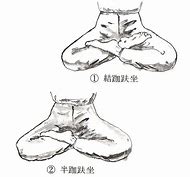
Forcing one’s legs into a lotus position may sound really harsh. Most American teachers that I know encourage their students to sit in ways that work for their body, including in chairs. I personally feel grateful to my teacher for requiring that I learn to sit hankafuza or kekkafuza. If she did not have the faith in me that I could do it, I would not have attempted it. There is something about sitting in a lotus posture that is quite grounding for me and really helps me to focus my attention. But I also understand that this is not for everyone, and I would never force my students to sit in this way. If their body was limber enough, however, then maybe I would encourage it.
While most Western teachers tend to be less rigid when it comes to how you sit, you nonetheless can find yourself sitting in stillness and silence anywhere from 20 minutes to 7 days. This requires anyone to have the ability on some level to let go of picking and choosing. This is how the Great Way becomes easy. When we let go of what we want and learn to accept the situation as it is, peace comes to the mind.
Zen Master Dogen’s “Universal Instructions for Zen Meditation” claim to be universal. Anyone should be able to do it. They only need to follow his instructions carefully, dedicate themselves, and be still. But can his instructions be applied to everyone?
For some people new to Zen, and even those who have been sitting a long time, expecting someone to sit for a long time without moving – regardless of posture – may be inappropriate, especially for those with a history of early childhood trauma, PTSD, or belonging to a marginalized community.
For a trauma survivor having the ability to choose is the pathway to healing. Not allowing choice can actually exacerbate trauma symptoms.
Trauma is defined as, “extreme lack of choice by an individual in a chronic way” (David Emerson, author of Overcoming Trauma Through Yoga). Trauma includes not only having one’s physical body hurt at a particular time, but also systemic forms of violence such as what the African American and Native American communities are presently facing as a result of the historical oppression they continue to experience. The recent “Stand up for Standing Rock” and the “Black Lives Matter” movements serve as testimonies to a systemic form of trauma.
One dimension of trauma that has been well documented in trauma survivors is a poor ability to make choices. Brain scans reveal, among other things, an under stimulated pre-frontal cortex in the brains of trauma survivors. The pre-frontal cortex is where the executive function operates. This is the place in the brain that is stimulated when decisions are made.
People with addictions (addiction often being the by-product of early childhood abuse or systemic trauma), have poor ability to make clear choices. “Just say no”, or asking someone with an addiction history to be self-disciplined may be unrealistic. Repeated lack of choice from an early age, or being constantly denied agency in one’s destiny has prevented the development of the ability to make sound judgements based on necessities or desires.
Part of the path to healing for trauma survivors is having opportunities to make choices, rather than being forced to drop choice.
If a trauma survivor shows up at a Zen center that is not trauma informed, and is told to do things “this way and that way” and to let go of their choosing, they risk having old wounds reopened. Furthermore, a teacher who is not sensitive to how trauma effects a survivor, may, at best, prematurely give up on the student, and at worst, re-traumatize them.
Dr. Judith Herman, author of Trauma and Recovery, writes, “No intervention that takes power away from the survivor can possibly foster her recovery, no matter how much it appears to be in her immediate best interest.” For a survivor, it is deeply hurtful to be told what to do.
That is why, in the context of a trauma informed Zen class, the teacher commits to empowering the students by not telling them what to do. Rather, they use invitational language and offer suggestions. Power is given to the students to decide, based on their own felt experience, what works and does not work for them.
Prior to studying Trauma Center Trauma Sensitive Yoga, as a Zen and Yoga teacher, I pretty much expected that serious students would simply follow what I ask them to do. I assumed that the student was not ready if they could not do what I asked them to do. It was a major bodily and mental shift for me to begin teaching in a way that empowered the students to make decisions for themselves. I clearly remember a palpable shift in my body-center when I gave a student of mine a choice for how to proceed. I was no longer in control of the situation. I was not in control of the student. It was liberating not only for the student, but for me, too!
In the past, because of my lack of understanding around trauma, not being in control would frustrate and seriously aggravate me. I would feel imprisoned. My thoughts were, “Hey! I learned to do this. I learned to drop my own ego. That’s what this practice is about. Why can’t you do it?! Just let go of having an opinion!” Of course, I was not able to verbally articulate this, and I probably wouldn’t have even if I could.
Once I understood that people with trauma are suffering in the present moment because of earlier childhood experiences or systemic forms of trauma that remain lodged in their body, my heart opened up. I realized that it doesn’t do any good to make a survivor conform to my will. The kind response, rather, is to offer opportunities, within the student-teacher relationship, for making choices. I empower the trauma survivor to create their own destiny, as opposed to me trying to shape it for them.
Given the widespread prevalence of trauma [1], my studies of the way trauma effects people have caused me to reflect on the way I teach Zen and the way that I’ve seen it taught in the United States. Is a blanket way of teaching meditation helpful for everyone? Do we know the signs of trauma in our students? Are we truly “liberating all beings” when we are not sensitive to those that come to us with a trauma history? Are we causing more harm than good as Zen teachers when we do not take into account an individual’s trauma, or the trauma caused by systemic forms of trauma (e.g. racism)?
Are we fulfilling our calling to teach the Dharma when we turn away those with trauma? Many Americans have some degree of trauma that goes unnoticed or diagnosed. How do we know, when a student offers resistance to a teaching, that this is because of their own ego? How do we know when a student’s resistance may actually be a sign of their own healing?
The Great Way is not difficult when trauma survivors get to pick and choose. However, for Zen teachers who are insensitive to trauma, the Great Way may be very difficult to teach effectively. Buddhist teachers offer meditation in prisons, mental health units, hospitals, to veterans, and to special needs populations, and to the marginalized. The prevalence of trauma in these circles is even higher than those of the general public. A minimal understanding of how trauma affects neurology, psychology, and community are absolutely essential for Zen teachers.
I learned about trauma thanks to my connection with yoga, and thanks to the encouragement of a friend who is a psychologist. I’m not presently aware of trauma education being offered for Zen teachers, so I feel an imperative to offer some of what I do know.
I have been teaching meditation in prisons for twenty years, and in Behavioral Health and Addiction Treatment centers for seven years. It’s only within the past two years that I have been actively studying trauma, and this has deeply affected how I teach Zen to those populations.
When I’m teaching to individuals that have PTSD I may remind them that it is their choice to be there or not, and if they need to leave for any reason it’s totally okay to return.
By beginning my classes in this way, I am immediately handing my power over to the participants. I’m empowering them to reaffirm their decision to be in the class, and if they change their mind, I see that as part of their healing process. The ability to say, “no” to a person with authority can stimulate healing if the person in power is open and accepting.
If the participants are in prison, then this empowerment through choice is even more precious. They don’t have the choice to leave their larger environment, and often they don’t have choices even within the many activities that they do. By making it clear that they choose to be doing meditation or not, I am letting them know they are in charge, and also not shaming them if they decide to leave.
When I teach meditation, I also incorporate choice into my instructions. While the Buddha’s life, itself, is a model of experimentation to see what works and what does not, this attitude is not clearly reflected in Zen Master Dogen’s, “Universally Recommended Instructions for Zazen”. Depending on the teacher, too, the degree of choices built into meditation instructions may be somewhat limiting for a trauma survivor. For example, Zen teachers often insist on practicing with eyes open. While having eyes open and noticing the external environment may actually be beneficial for addressing trauma, if it is done without choice it may become problematic. I may say something like, “Zen meditation is traditionally done with eyes open. You are welcome to close your eyes or have them open. That’s your choice. Feel free to try both ways and see which works better for you.”
Offering alternatives to posture can also be incorporated into meditation instructions. Students can be encouraged to change postures in the middle of meditation, to move to a chair, to walk, or even to lie down. The point is to allow opportunities for the development of agency, a feeling that one has control over themselves and their environment, and can change how they are relating to the situation. Expecting a survivor to “just sit” and not move does not foster agency unless that person chooses to do so.
Another way I foster agency in a prison setting is to hand the meditation bell over to the students. I ask if anyone would like to be in charge of ringing the bell to start and end meditation. I also have the students decide how long they will sit for. 10 minutes? 20 minutes? This way, they take leadership in their own environment, rather than me telling them a proscribed length of time and expecting them to do it. I am also conscious of the fact that whatever they decide in terms of the length of sitting may not be in their immediate best interest. It may be too long for some, and too short for others. Again, if I’m teaching from an empowerment model, this is not a problem
A trauma informed Zen class may look different from a “normal” Zen meditation group. “Daishu ichi nyo” means “everyone doing the same practice together.” It’s about living in harmony in a cloistered environment. Everyone meditates together when it’s time to meditate. They work together when it’s time to work. They sleep when it’s time to sleep. This is expected of anyone who practices at a Zen temple. To be lying down or doing walking meditation when everyone else is doing sitting meditation, for example, is not the practice of “Daishu.” In a recent meditation retreat I lead, I gave students the opportunity at any time during the sitting period to practice walking meditation, to lie down, or to take a break all together from the group.
While “Daishu ichi nyo” may be absent in a trauma sensitive setting, if the teacher is actively empowering the students to explore different ways of being, then there will remain intact a strong spirit of inquiry which may otherwise be lacking.
I myself am still exploring ways of creating a safe, stable, and transformative atmosphere for practitioners with trauma. The above are just a few examples of what I do, and I’m still very much learning ways of improving my approach, as every student is different.
I am grateful to ALL my teachers for offering ideas and options I would not have been able to see without them.
[1] According statistics found in David Treleaven’s, Trauma-Sensitive Mindfulness, one in five women in the United States will be raped, and it is estimated that every 28 hours a Black person is murdered by police, security guards, or State sanctioned vigilantes.