Here you’ll find reflections, teachings, and writing from the Zen Fields sangha, gathered over the years. Topics range from meditation and Buddhist philosophy to parenting, yoga, social and ecological justice, interfaith connection, and the places where Buddhism meets science. Browse by category below, or start with the most recent post and follow what draws you in.
Studying loss, in body and mind, means letting go of expectations and finding calm presence.
Sawaki Kodo Roshi, a 20th century Japanese Zen Master, talked about Zen as the “Study of loss.” What I like about this is how unappealing this sounds on the surface. In a culture that values unending growth and gain, who wants to study about loss? Kodo Roshi, in fact, says in Japanese, “Son wa toku, toku wa son” = “Loss is gain and gain is loss.”
These statements seem to be the complete flip of what we generally think of loss.
But we can find similar sentiments in the Book of Ecclesiastes, one of the books of the Bible:
Sorrow is better than laughter, because when the face is sad the heart grows wiser. (Ecclesiastes: 7:3)
One way to approach the study of loss is to look at it with reference to body and mind.
With regards to body, we are constantly changing – losing if you will – our old self again and again. This body, when we take the time to look, even with all the work we do to keep ourselves healthy, well fed, and fit, our body is constantly letting go of something. It could be the sweat, tears, or urine that come out of us. Or perhaps the air that we exhale in each breath cycle. Consider taking a few moments today to study the way your body manifests loss. How does that register with you? Are you aware of it as a kind of letting go?
With regards to mind, when we practice meditation we let go of thought – not of the thinking process but of our over identification with our thoughts. We are educated to believe that our thoughts are real and that they point to something concrete. (Consider Descartes, “I think therefore I am”.) Letting go of thought can be frightening at times because our thoughts tend to define who we are.
However, when we make the firm decision to look at loss, this looking can also ground us in the reality of our moment, the “is-ness” or “thusness” of right now. Or the “I am” quality of God. The reality of loss can help us to be more present to what is, rather than the way we want things to be.
When you are feeling anxious or hurried (like I often feel) you can ask yourself if you want, “Do I have an expectation that things should be different than what they are right now?” Letting go of our expectations is a study of loss, and it may also function as an antidote to the overwhelming anxiety that we sometimes experience in the present moment.
The study of loss has the potential to bring a well grounded calm presence to this moment. We may find greater equanimity with what is, and bring a measure of self-regulation to our emotional state. In this sense, loss is gain. I recommend trying out the practice of the study of loss, and then coming to your own conclusions about it.

You don’t need superpowers to save all beings: sit, serve those in front of you, and play.
I grew up watching TV shows and movies that portrayed superheroes like Luke Skywalker and Yoda defeating supervillains like Darth Vader. I’m still attracted to these kinds of movies, but I also know that we don’t need to be super-human, saintly, or even to become a Buddha to be of service to others or to save the world.
It can be daunting to take the Bodhisattva Vow to save all beings. Remember, though, it’s a vow that is mean to inspire us to live to our utmost, and to remind us we are never out of work.
I grew up watching TV shows and movies that portrayed superheroes like Luke Skywalker and Yoda defeating supervillains like Darth Vader. I’m still attracted to these kinds of movies, but I also know that we don’t need to be super-human, saintly, or even to become a Buddha to be of service to others or to save the world.
But my vow as a Buddhist is to save all sentient beings, and when I make that vow I sometimes feel like a superhero. My superhero strength is not evident though in my everyday life. The miracles come in my ability to get out of bed, to eat breakfast, to brush my teeth, and to do what I can for my family and sangha. This is fueled by my trust in my own Buddha nature. I don’t always see it, but I have faith that Buddha works in me, and it is this faith that gets me up in the morning.
Becoming a super-human, or a Buddha is not my practice. My practice is to simply be more and more of who I am right now, with all my human fallibilities, and to serve others by recognizing and getting my own ego out of the way.
Zen practice is really comprised of three parts. The first part is to practice zazen. We come to a place of stillness in our physical body and not pay too much attention to thoughts that roam around. Zazen is about grinding up the “me” in practice. While I may not be aware of my own Enlightenment, I have faith in it, a faith that is not blind to the observations of science.
The second part is to save all sentient beings. When I get up from sitting, my practice is to be of service in the best way I know how to those who are right in front of me. I don’t need super-powers to help others, I just need to welcome with open arms those who come, recognizing our shared humanity, that I am in them, and they are in me.
The last part is play. Avalokiteshvara Bodhisattva is said to “play” in this world of suffering. Play helps us remember not to take ourselves too seriously, and to enjoy our life.
These three parts – zazen, serving others, and playing – make a stable base for zen practice, and helps me get to the great matter of life and death.
Soto Zen asks us to sit with no designs on becoming a Buddha, or on becoming better.
We come to meditation seeking something – greater happiness, freedom from anxiety or grief, or even Enlightenment. I started out because I wanted to feel peace of mind, freedom from addictive behavior and a way to deal with grief and loss.
Today there are now hundreds of thousands of meditation centers to choose from. They are not all the same. Depending on what school you discover, you may be taught ways to calm your mind, how to be more mindful, or even perhaps how to become one with the Buddha or God. The common thread through these approaches is that where we are now – in our body and mind – could be much much better. There is something we can do to transform our lives and end the suffering we are in.
Siddhartha’s own story of transition from a prince to a Buddha serves as a foundation for all these paths. He started out as an ordinary human being, a member of the kshatriya or warrior caste in India. He made the decision to leave his family and Kingly responsibilities to seek Enlightenment for the sake of all beings. He practiced assiduously for 6 years. Then, after much trial and tribulation, became “Buddha.” This, we are told, is possible for anyone who puts their mind to it.
Improvement or “transformation” modes of practice have their merit and may be viable for us in some ways and at some times. I genuinely respect these approaches. However, Soto Zen meditation is different from some schools of Buddhism, Hinduism and secular meditation in an important respect.
Early Buddhist teachings center on attaining Enlightenment through practices that help one end desire. Through awareness of the various components of the human being, such as the five skandhas or the 18 elements practitioners focus on getting at the root of suffering – greed, hate, and delusion – and seeing the impermanent and non-self nature of all that is. As Buddhism aged, there emerged practices of becoming one with various Buddhas through, for example, concentration on images of a teacher. Becoming a Buddha was (and still is) the goal. Another practice includes perceiving the empty nature of all phenomena.
Similarly, many Hindu meditation practices focus on liberation from samsara by following certain methods such as those found in the Yoga Sutras. The Yoga Sutras are a very practical guide for anyone who wishes to understand the way the mind works, and to deepen their meditation practice. They offer suggestions for how to calm the mind and enter various states of samadhi or super consciousness. Through purification of the mind, through tapas – the heat generated by ascetic practice – one gets closer to attaining the goal of moksha or freedom from the round of samsara.
Secular forms of meditation as are found in the modern mindfulness movement de-emphasize or eliminate these religious concepts such as Buddha, Enlightenment, samsara, nirvana, and reincarnation from their lexicon. In lieu of this, they focus on mental and physical health and well-being, such as reducing stress or coping with chronic pain. The mindfulness movement has been an important contribution to alternative forms of healing in our culture. Yet it too is a program which moves from sick to healthy, or suffering to the end of suffering, in a similar way that the preceding examples do, albeit without the religious language or imagery.
In contrast to this, Zen Master Dogen, in his universal instructions for zazen, says, “Have no designs on becoming a Buddha.” There is an active awareness that what we do when we sit cross legged is to try to become something or someone else. The Soto school basically says, be aware of that natural tendency and don’t do that. All sorts of teaching methods such as those found in the Koan cases, are there to prevent us from this natural tendency to want to become a Buddha, to achieve greater health, or, in short, to become something better than we are right now.
One story that I love to share is that of a monk who was sitting in meditation when his teacher comes by and asks him what he’s doing there. The monk responds, “I’m making a Buddha.” The teacher responds by picking up a brick and polishing it. The monk asks him in return, “What are you doing?” The teacher responds, “I’m making a mirror.”
“How can you make a mirror by polishing a tile?” asks the monk.
The teacher responds, “How can you make a Buddha by sitting in meditation?”
The surface answer is that you can’t do that.
The question remains, though, why bother to practice meditation if it doesn’t do anything for you? This is really the question that practitioners of Soto Zen need to dive into.
My teacher often said that there are three doorways to Zen practice: impermanence, remorse, and self-improvement. Impermanence is basically that we become aware of the truth of the shortness of our life in a very visceral way. Remorse means that we recognize we’ve done something wrong, and we want to make amends for it. Practice can and is done by many because of remorse. But the last one, self-improvement, is a bit of a revolving door. It takes you in to the Enlightened realms long enough to taste the air conditioning on the inside, but unless there is a deeper reason for practice, that revolving door will swing you back outside.
In other words, it’s okay to start out practice with the desire for transformation, but for some folks that’s just not enough to keep them on the path. Consider impermanence or remorse as ways to help you enter more deeply. This is why we say in the Soto school, practice without gaining mind, or, in Dogen’s words, “Have no designs on becoming a Buddha.” But what does this, “Have no designs on becoming a Buddha” actually feel like in our body and mind?
One suggestion while the next time you are engaged in meditation is to recall the other practices you employ, be it mindfulness, insight meditation, a yogic form of meditation, etc. Do them and then notice what happens with your mind. Where is it? Is it in the future? At some point consider saying to yourself silently, almost like a mantra, “Have no designs on becoming a Buddha,” and just see what happens. Or, if you prefer the non-religious language, consider saying, “Have no designs on being more mindful.” Or, notice whatever desire is rising in your mind in that moment and say, “Have no designs on attaining [fill in the blank].” See what happens.
Zazen is wisdom itself, not a means to an end; it grounds us and opens the way to compassion.
It can be helpful to remember why we came to meditation in the first place. For many of us, anxiety and stress are big issues. Family, work, even meditation can make us stress out. The thought of carving out more time to do something else can be daunting. It’s easier to simply check out and watch a film.
I’m not at all against watching movies or doing things that allow us to feel pleasure. Meditation, however, can open our bodies and minds to new ways of seeing that we never new existed. Then, instead of trying to get rid of stress, we see that stress may be an ally for awakening.
Consider these lines from the Avatamsaka Sutra;
The state of knowledge, hard to enter,
They [Bodhisattvas] can abide in by subtle wisdom.
Their minds ultimately imperturbale;
Those firm in practice travel this path. [1]
How do we abide in subtle wisdom?
Wisdom = Meditation
In other words, wisdom is not something gained through knowledge or experience or learning. It’s manifested by sitting still and upright with eyes lowered in a cross-legged posture. That is the embodiment of wisdom. This wisdom is depicted by the Bodhisattva named Manjushri. Manjushri is often shown carrying the sword of wisdom that cuts through delusion.
I remember training with one teacher who said, “If you want wisdom, do zazen. Manjushri, that figure on the altar, is wisdom.” Zazen is wisdom. It’s the practice of noticing that thoughts give rise to whole worlds, and then having the courage to see through those clouds of thoughts, returning to the nakedness of the moment with zero artifice. Until I met with a Zen teacher, I had thought of wisdom as something older people have, as equivalent to sages or people with PhD’s, as those with worldly experience, or as something gained through learning facts. It’s not that those things are not important and that those folks don’t have something to offer, however, our ordinary way of thinking about wisdom is deeply problematic.
For one, it assumes that wisdom can be transmitted from one person to another. In other words, someone who is wise can impart to you their knowledge. Consider how so many of us are looking for guidance outside of our self: from teachers, religious leaders, politicians, or parents. We are expecting someone else to carry the burden of helping us figure out what to do, and then following them.
We can follow; however, we must be careful about following anyone if we are out of touch with our own innate wisdom.
The above verse says, “Their minds ultimately imperturbable.” In other words, we know wisdom is manifesting in our self when we are unshaken by what other people say or do, or by what is happening in the external world. This does not mean that we have no feelings or are indifferent. However, there is always some part deep within us that is imperturbable, like the bottom of a deep lake during a storm
It’s not that we have to become imperturbable. Imperturbability is always there. We practice in order to have access to that which is within us. This way we are not fooled by what people say or do. Becoming firmly resolved to meditate regularly, we may sense a shift in the energy of our body. We may notice a sensation just around or below our naval as we make the resolve to practice. This feeling helps ground us and may lead to the arising of confidence.
The other point is that we mistakenly assume meditation is a method to get us from where we are to where we want to be. Admittedly, that’s what many forms of meditation are aimed at, including Buddhist forms. But Soto Zen is a break from that kind of thinking. Meditation is not a means to an end, but an end in and of itself. We don’t sit to attain anything. We sit because we are totally and completely content (even if we don’t feel that way).
So, it’s important to resist the temptation to use meditation as a means to get somewhere. If anything, meditation is a ritual that reenacts the enlightenment of the Buddha. [2] We step into the Buddha’s mind.
Once we are grounded, we can move on to the next verse:
Able to enter all realms of being in the cosmos
And find the ultimate wherever they enter,
Their spiritual powers free and all embracing;
Those illumined by truth travel this path. [3]
Once grounded, we can start to see things through the other’s eyes, feel things through the shoes of another. This is the arising of compassion. We are no longer stuck in a separate self that is an isolated being. We enter this path through relationships and getting to know how others feel.
It’s not enough to talk with people that affirm our prejudices. We need to really listen to the pain in the hearts of others so that we can have some degree of understanding. Compassion is the undoing of anxiety, not only for our self, but for those we have compassion for in the moment. This is not an imaginary activity, but something that takes place in conversation, in close proximity with those we are around, or even over real time internet discussions. We do our best to feel what the other is feeling and put ourselves in their shoes. At the same time, we might listen to the wisdom of our own body to help us confirm what we are sensing. Calm abiding is there not so much as a result of us being able to control or regulate our nervous system, but accompanies the deep desire for and confidence in complete and total Enlightenment.
[1]See Avatamsaka Sutra, p. 475, translated by Thomas Cleary.
[2]See Taigen Leighton’s article, “Zazen as Enactment Ritual,” in Zen Ritual, edited by Dale Wright.
[3]See Avatamsaka Sutra, p. 475, translated by Thomas Cleary.

After a life of racing, he learns from his teachers that practice, and life, can be enjoyed.
In spring there are hundreds of flowers,
In autumn the moon;
In summer breezes,
and in winter snow.
If your mind is not clouded with things
You are happy any time.
Racing is what I did for a living. I raced to get to the swimming pool. I raced in the water. I raced to get my homework finished. I raced against my classmates for the best grade. When I sat down to rest, my thoughts raced. I watched fast paced movies, gorging on violence, sex, bodies crashing into each other, and the noise of gunfire. None of this was real, but it was a reflection of the reality of some parts of our world, certainly parts of my own mind, and so it felt real, and I felt connected to others through that “tele – vision.” Yet like Prince Siddhartha prior to seeing the four sights (a sick man, a senile man, a corpse and a sage), I knew there was something missing.
I had little tolerance for boredom. Being constantly on the go, my life became uni-directional. Stopping meant sleep. Slowing down or contemplation was not in my repertoire of experience. In my later teens and into college experimenting with alcohol, marijuana, LSD, and psilocybin, I see now, was the result of not being satisfied with life, and not really having a moral compass with which to direct my, at the time, uni-directional energy.
Comparing myself to others is what gave me meaning. Was I faster or slower than the next person? If slower, I needed to work harder. If faster, I could take pride in my superiority. Was I smarter or dumber than the other person? I found myself through the comparisons juxtaposed in my mind, a shadow of the real me. I didn’t know that there was another measuring stick by which to gauge my life; Buddha’s measuring stick that went beyond comparisons.
Meanwhile, it felt like my heart was bleeding, a wound that I would not recognize until the Dharma gripped me by the shoulders. I was rushed into a one-story red brick building adjacent and connected to the chapel. The sign on the heavy white door read, “Silence, Zen Meditation in Progress.” I slowly creaked the door open and poked my head inside. They hadn’t started yet. I was relieved to be the first one to arrive. (There’s superior mind). The ceiling was 20 feet high with portraits of Mr. Rooke and his wife, after whom the chapel was named. On the far end of the room sat a large black piano.
Space was largely what made up the room. Dai-En Roshi was setting out meditation cushions in the center.
Silence was palpable. The large stained-glass windows did not open. No sound of outside could be heard. The air conditioning unit occasionally breathed in and out as it turned on and off.
What was I running from? What was I racing to? Could I not have slowed down and enjoyed my pace sooner? Why did I need someone to tell me these things? Couldn’t I do this myself without instruction? These questions crept into my mind as we sat without movement, mouths closed, just sitting.
“You can enjoy your sitting, you can enjoy your breathing, you can enjoy your life. There are no exceptions for any of the ‘D’ words: death, disease, disaster, deluge.” These words of my teacher dissolved the anxiety I had been experiencing in that moment. Practice doesn’t need to be hard. We don’t need to work hard to overcome suffering. With a change of perception, we truly can enjoy this moment and appreciate our lives no matter what. We only need to give ourselves permission to do so. Or sometimes we need to hear someone else give us the permission. To hear my teacher say these words, itself, was the permission I needed to relax and be happy with myself and my life. The question remains though, how can I remember to enjoy practice?
Dai-En Roshi had been practicing with Japanese Zen masters for 15 years, during her 23-year residency in Japan. As a lay person she was taught to maintain a half lotus (a cross-legged posture where one foot is lifted onto the opposite thigh) position while doing zazen. This could be an excruciating posture for anyone if they are not flexible in their hips. In the Temple where Dai-En Roshi trained, it was expected that both knees would touch the ground while sitting half lotus, however, she was not able to do this at first. One knee remained off the ground. After several months of sitting in this way her hips finally relaxed enough that both knees touched.
In my own experience with full lotus posture, it demands constant attention. The hips and knees dictate whether one can continue in the posture or not. It’s not necessarily comfortable or blissful, at least at first. But there is a lesson here. The process of developing one’s posture speaks to the importance of remaining with one’s internal experience even though it might be challenging, uncomfortable, or a source of suffering. The body will adjust. Dai-En Roshi said to me at one point in my training:
“The only reason I continued to practice was because the pain in my heart was greater than the pain in my knees. If the ratio had been the other way, I don’t know if I would have continued.”
Meditation brings us face-to-face with our suffering. “Life itself is suffering” is the first Noble truth which the Buddha proclaimed. Though they are not all the same, training in a Zen Temple can be very challenging between figuring out diet, experiencing lack of sleep, and spending hours sitting still in meditation as well as doing physical labor. Yet, it is still a reflection of the wider society in which a temple is embedded. Suffering exists in a Buddhist temple. It also exists outside of the Buddhist temple. Temples are not a place to escape from suffering. Pain doesn’t magically disappear when we come to a temple. Temples are places to take refuge in the three treasures – Buddha (a person of wisdom), Dharma (teachings), and Sangha (or community). The study of Dharma facilitates a shift from the first Noble Truth of suffering, to the third and fourth Noble truths – that there is a way out of suffering and there is a specific path to follow that leads out of suffering.
After completing her training in Japan, Dai-En Roshi went to study with the Venerable Thich Nhat Hanh in Plum Village, France, for three months. Thich Nhat Hanh, a Vietnamese Zen Master, had experienced much suffering during both the French and later American occupation of Vietnam. He came to the United States during the late 1960’s to speak to churches about the atrocities he was witnessing, and to call for an end to the Vietnam War. Martin Luther King Jr., thanks to his meeting with Thich Nhat Hanh during his visit to the United States, was able to see the connection between the Civil Right’s Movement and to the protests against the War. Thich Nhat Hanh was nominated by Martin Luther King Jr. for the Nobel Peace Prize in1969. As a result of his activities in the States, Thich Nhat Hanh was exiled by the Vietnamese government. He eventually relocated to France where he and many Vietnamese refugees as well as people from around the world created Plum Village, an internationally known retreat center where the teachings of the Buddha are taught and practiced.
Thich Nhat Hanh’s Buddhist practice is, in some ways, similar to Zen in Japan, and in other ways quite different. Because Vietnam is a hot country, the rhythms of the practice are much slower than in Japan. Emphasis is placed on slowing down and relaxing in whatever activity is being done. There is an emphasis on “mindfulness,” and practicing in such a way that one remains rooted in mindfulness. These teachings are also found in Japanese Zen, but because the cultures are not the same, the practice is manifested differently.
In sitting meditation Thich Nhat Hanh emphasized enjoying the practice of sitting down, of breathing, and, therefore, enjoying life. These instructions coming from someone who had suffered much hardship, carry a tremendous weight. Thich Nhat Hanh was living proof that the Buddha’s teaching of transforming suffering into joy is something anyone could do if they worked at it. He encouraged smiling as a practice and suggests doing this in seated meditation. He calls it, “the yoga of the mouth.”
I had the opportunity to train with Thich Nhat Hanh during an annual three-week retreat offered at Plum Village in the summer of 2006. The title of the retreat was “The Breath of the Buddha,” and it focused on the Sutra on Mindful Breathing, one of the earlier Buddhist teachings. Almost 900 people from around the world attended, and I had the opportunity to live with his monks. Like my teacher, I wanted to learn how to integrate his style of practice with the Japanese form of Zen I had been studying.
During one of his lectures he talked about smiling, the importance of practicing in a way that brings joy to oneself and others, and about the wisdom of the body. Even if happiness is not present within us, he said, practice smiling. We may not feel like smiling, but if we practice the “yoga of the mouth,” then feelings of joy will come. He encouraged us to allow our body to take the lead.
He reminded us of the mind-body split in western culture and how we value mind over body. There is a prevalent and mostly unconscious belief that the mind is superior to the body. This belief has roots in the famous saying of Descartes, “I think, therefore I am.” In contrast to Buddhist teachings, Descartes saw the mind as superior to and separate from the body. The logical conclusion of this train of thought is that the mind, not the body, is responsible for the happiness of the mind. From this perspective, to put a smile on one’s face would be disingenuous.
But in Buddhist teachings, mind and body are not two separate things. Mind, in fact, is located in every cell of the body, not just the head. Our mind is also in our feet! Body is the temple through which our Buddha Wisdom reveals itself. Mind and body are not just equal but are inseparable.
If I truly love myself, then I must love and hold in high esteem this body, and respect that the body is not inferior to the mind. They inter-are. I can allow my body to take the lead by putting a gentle smile on my face, the smile of a Buddha. This smile of mine can be contagious. When I see the smile of another person, I smile quite naturally without any effort. If the other person cannot smile, then I can smile for them, be happy for them, and pray that there is some ease to the pain they are experiencing.
The highlight of the “Breath of the Buddha” retreat, for me, was a very intimate breakfast one morning with Thich Nhat Hanh. One of the visiting monks that I had been residing with, an American who had been practicing in the Korean Zen tradition for many years, wanted to have a personal meeting with Thich Nhat Hanh so that he could offer his respects. He asked me to join him, and I was over-joyed at the suggestion. The Korean-trained monk asked one of Thich Nhat Hanh’s attendants if the two of us could meet him. Of the 900 people there, I knew only his closest disciples would have such a privilege. To my great delight we were invited for an intimate breakfast with Thich Nhat Hanh and a couple of other monks and nuns in a small private room away from the hustle and bustle of the 900 other retreatants.
This was an unforgettable moment. I was not two feet away from a venerable monk whom I had been revering for years. I felt as though my feet were not touching the ground. I had been reading his books, listening to his talks on CDs, and attended his retreats, but never had I been this close to him, and never had he looked me directly in the eyes nor smiled at me. I could hardly contain myself. He said a few things to us in a very relaxed way, encouraged us to put the teachings of the Buddha into practice, and expressed his delight in meeting monks from another tradition. What a gift this was to me.
“A teacher,” Dai-En Roshi said to me, “is someone who is happy.” This means that they’ve done the work to transform their suffering… not that they don’t have suffering. Can I practice in such a way that transforms suffering to joy in myself and others? This is my sincerest wish.

We chase pleasure, gain, praise, and fame; meditation and a balanced life offer the antidote.
“Don’t run after pleasure and neglect the practice of meditation. If you forget the goal of life and get caught in the pleasures of the world, you will come to envy those who put meditation first.”
(Buddha – Dhammapada, Chapter 16:1)
We all want highs. We desire elevating our spirit. We seek out pleasure as if that is the goal of life. The flip-side is that no one desires pain. We avoid it at all costs. This happens on a cellular level. Our cells are programed to take in nourishment, take in the good, and release toxins. The cell membrane is that barrier between the inner and outer worlds which functions as a protection for that which is on the interior. It guards the life force in the cells system. Our whole body is comprised of trillions of cells all serving in this capacity. Our whole being, as one system, then, is designed to be watchful of what it takes in and what it releases.
As we develop, move out of infancy into childhood, we become slightly more sophisticated. As Zen teacher, Grace Schireson writes in, “Blowing in the Wind: Facing Challenges in Zen Practice,” rather than simply seeking pleasure and avoiding pain, we desire to accumulate pleasure and run from losses in pleasure. Pleasure and pain morph into gain and loss. The child begins using her/his executive function in the brain to make decisions and strategize on how to maximize pleasure. Instead of passively experiencing pleasure and pain, the child will want to do things to continue pleasurable experiences, such as playing more with her toys.
As a child becomes a young adult, a third morphology takes place. Praise becomes the face of pleasure, and blame becomes the face of pain. Praise and blame become our motivating factors. We seek out the praise of others, our teachers for example. We like the feeling of being told how good we are. Conversely, we shy away from blame – being told we should not do “X”.
Lastly, as we enter into old age, looking back at the legacy we’ve left behind, the predominant seeking and avoiding pattern transforms into fame and shame. Will people remember us in a good light or a bad light?
These four pairs: pleasure/pain, gain/loss, praise/blame, and fame/shame, profoundly motivate us even when we are conscious of their presence in us.
Some questions we might consider:
The Buddha hints at an alternative to these four pairs: meditation. Meditation is not just an alternative, but an antidote. If we take the medicine of meditation – following our breath, stilling our mind, making the intention to be upright, finding the Buddha within our own heart, having faith in our own efforts, trusting that the universe has a plan for me – then we may begin to experience the benefits.
We also need to consider our physical, emotional, family, and work-lives. We can ask the following questions:
The responses to these questions are most probably mixed for most of us. We need to pay attention, though, because all these levels will have an effect on our meditation. To the degree that the external world is taken care of, to that degree will we experience the benefits of meditation. If our external world is a mess, it will be difficult to sit still and in peace. The Buddhist path asks us to consider our whole life – external and internal – not just meditation.
I recently came across this verse in the Katha Upanishad, that I believe sums up or perhaps completes what the Buddha said. In this Upanishad, a young man is questioning the lord of death about what happens upon death. Does one live on? Does one cease to exist?
Yama, the lord of death responds,
The joy of the spirit ever abides,
But not what seems pleasant to the senses.
Both these, differing in their purpose, prompt
Us to action. All is well for those who choose
The joy of the spirit, but they miss
The goal of life those who prefer the pleasant.
Perennial joy or passing pleasure?
This is the choice one is to make always.
Those who are wise recognize this, but not
The ignorant. The first welcome what leads
To abiding joy, though painful at the time.
The latter run, goaded by their senses,
After what seems immediate pleasure.
We are all travelling the bumpy path to Enlightenment. None of us are perfect. In loving ourselves fully, warts and all, we enter the Universal Door to the Buddha Land.
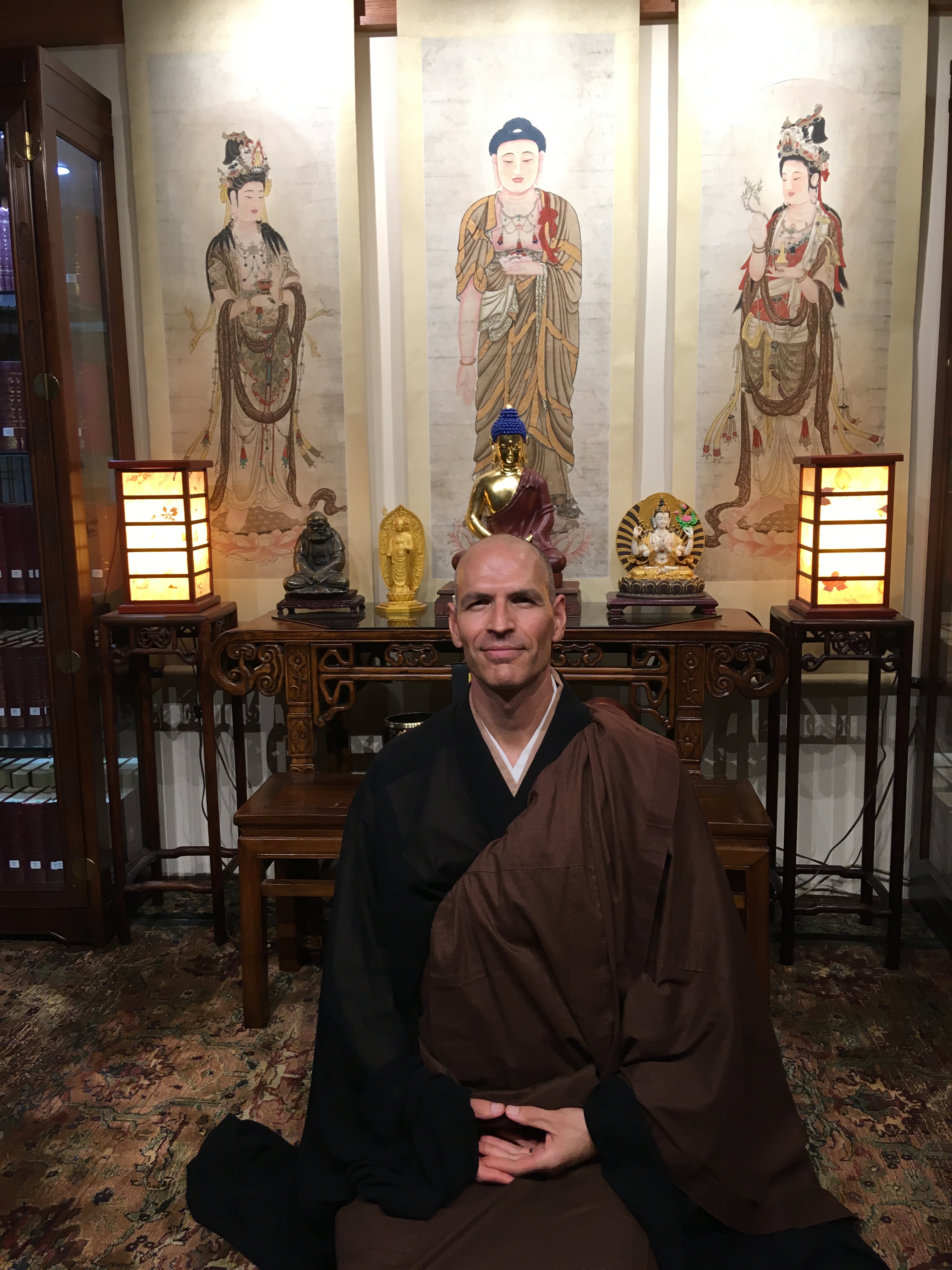
The Buddha’s cow story asks which possessions, roles, and labels keep us from real freedom.
I heard this story when I was training at Plum Village in France under the guidance of Venerable Thich Nhat Hanh in 2006. I am struck by how much I continue to reflect on its meaning.
One day the Buddha was out in the country side practicing walking meditation with his disciples. They came across a cow herder who anxiously said to the Buddha, “Venerable monk, my cows all ran away. I’m looking for them. Have you seen them come by this way?”
The Buddha replied, “We have not seen any cows in this direction. You might want to look in the other direction.”
The man hurried off. Buddha turned to his disciples and said, “Aren’t we lucky, we don’t have any cows.”
A cow in this story is symbolic for those things that prevent us from experiencing real freedom. They could be our material possessions. Once you own something, you have to take care of it. You have to worry about it. In the time of the Buddha, monks owned three robes and one bowl. They were forbidden to own anything else. Food and shelter was freely given to them as needed by supportive lay followers. Their practice had to be worthy enough to receive such offerings.
A cow could also refer to a rank or a position that one holds. Once a person has a certain degree of status and power, it’s hard to let that go. Yet, the holding on to that power often comes at a high cost. There is the constant worry that someone else will come along and displace you. Or that you’ll eventually become ineffective in your position. The stress from work can give us all kinds of physical, emotional, and mental problems.
Zen Master Rinzai, paradoxically, encouraged his students to be the person of “no rank.” Even in the spiritual world our competitive natures can creep in. We want to be closer to Enlightenment than other practitioners. We might feel envious of students who are able to go on more retreats than we are. This is all nonsense, though. Our inherent Enlightenment is not affected by how much we practice. Enlightenment is always there regardless of whether we recognize it or not. The wave is always a part of the ocean, the question is whether the wave recognizes it’s “ocean nature” or not. The practice of the Zen student is to touch their Buddha Nature in every opportunity available to them. We don’t need to wait for the right time, the perfect teacher, or the right retreat to come along before we touch our Buddha Nature. Buddha Nature is our birthright.
The question is, what prevents us from connecting with our inherent Buddha Nature? What are our “cows”?
We all own things, and we all have certain positions or ranks we want to hold on to. We may not have the luxury to just let those things go. Or maybe we do, and we just have not looked carefully enough at our options, or we are afraid of changing.
Practice is about taking an honest look at ourselves and our lives and assessing what is a true need versus what is something we just want to have as a kind of security. We may not be in a position to give up certain things. But have we really looked carefully enough at our cows?
When I look at my own responsibilities these include my work as a Zen Priest and my duties as a father and husband. These duties if abused or neglected will cause great harm. But on a subtler level I need to be watchful that they don’t turn into “cows”. In other words, I can identify myself with these roles and forget that these are not who I am. Forgetfulness of this is where the “cow” comes in. I need to remember that these roles are more like a mask that I take on and off, but sometimes the mask itself gets glued to my face and I can’t distinguish myself from the mask. I remember a Catholic monk saying, “I’m not a monk, I’m a man wearing monk’s clothes.” This expresses my sentiment exactly.
Prior to my “Home Leaving Ceremony” (priest ordination for lack of a better description) there were times that I felt that I had no real mask to put on. I was a nobody. My teacher had me wait six years until she offered me the “Home Leaving Ceremony.” During that extended period, I felt extremely vulnerable, not having a secure identity. I suppose my label could have been “student”, but I wasn’t a student in the way our society recognizes a student. I wasn’t enrolled in a University. I wasn’t getting a degree that I could then use to apply to a job.
At this time, I also had no steady work, nor did I earn income in the usual sense, nothing I could call, “my occupation”, and no family to support. I was neither a husband nor a father. I was doing work for my teacher and for the temple in exchange for receiving the Dharma, room, and board. My work included cooking, cleaning, gardening, being the Treasurer, and attending to the needs of my teacher, including driving her to prison for meditation with the Buddhist group or to the airport for engagements further away. I had no teaching responsibilities for several years.
I am eternally grateful to have been put in such an awkward position as a young adult. Luckily, I was supported by a Zen community and a teacher so that I could really just practice Zazen and learn. Being open to my own vulnerability is where a lot of growth happened.
Within Soto Zen there is a tradition for both lay and priests to help us identify our attachment to the label of “Buddhist”. During the first meditation period in the morning Zen Buddhists sit without their outer Buddha robe on them. Once the “Robe Verse” is recited, one is then permitted to wrap themselves in their robe. So, we sit first thing in the morning without relying on our robe. It’s a reminder that underneath our layers of clothing there is just this body wrapped in skin. Even a Buddha robe is not going to protect us from our humanity nor our vulnerability as a human that lives and dies.
With regards to family responsibilities, questions I have found helpful in order to make the distinction between mask and reality are, “What does honesty look like when I am in front of my wife and son? What if I shared my true feelings rather than pretended everything is okay?” These are questions I continue to ask myself. Like anyone else, family demands of me my time, energy, and effort to keep things moving. There is no way I can maintain constant harmony. The question is not if things fall apart, but when. At those times, introspection rather than blame has always proved helpful for reestablishing connection.
The labels I have been given – Zen Priest, father, husband, son, brother, male, American, human – none of these will protect me from dying. If I’m not careful in my practice, they all have the potential to become my “cows”. I can’t lean on those roles when it comes to the “Great Matter of Life and Death”. What I can do is tap more deeply into my own being, love myself more and do my best to show my concern for the wellbeing of everyone in my life. Though I continue to strive to carry out the Bodhisattva vow to save all sentient beings, maybe, just maybe, I can be a little less of a jerk, and a tiny bit more considerate to one or two people in my life.
Questions for reflection, journaling, and discussion:
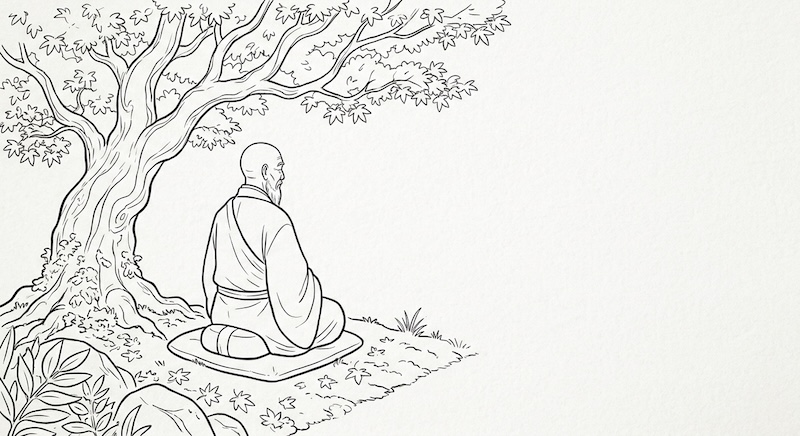
Trauma survivors heal through choice, so Zen teachers should invite, not instruct.
One mark of a well-polished Zen monk is the ability to accept any situation as it is, without trying to change anything. The first line in the ancient Zen poem, “Faith in Mind” reads, “The Great Way is not difficult for those who do not pick and choose.” A good chunk of Zen training – whether or not you are a monk – is learning to let go of picking and choosing, and simply accepting what you receive. One who can do this finds the Great Way easy.
In my own experience, when I finally realized that my teacher – Dai-En Roshi – was less interested in my opinions and more interested in me dropping my agendas and simply listening to her, my relationship with her began to improve quickly. I was no longer burdened with having to prove myself. My job as her student was to be an open ear. My teacher described this phenomenon by making the analogy of pouring water from a full vessel into an empty vessel. This is “shiho” or Dharma Transmission. In order to receive from the teacher, we need to empty our self.
Aoyama Roshi in, “Zen Seeds” writes, “A monk’s mouth should be like an oven.” In other words, just as an oven does not refuse what goes into it – cooking everything without discrimination – so too should a monk accept what comes to him or her without showing preference for one thing or another. This applies not just to monks, but any Zen practitioner.
I remember hearing a story from my teacher about a Japanese Zen monk who tied bricks on to his knees in order to force his legs into kekkafuza (full lotus). Monks and laypeople alike, in Japan, are expected to sit hankafuza (half lotus) or kekkafuza if they want to practice zazen at a temple. Recently, I received a letter from Eiheiji, our head temple in Japan, inviting myself and my students to do a four day sesshin. One of the requirements was the ability to sit hankafuza or kekkafuza for “a long time”.
When my teacher practiced in Japan at a Rinzai Zen temple, she was expected to sit at least hankafuza, even though one knee resisted touching the tatami. It took several months before the muscles in her hips softened enough for her knee to touch the ground. I remember her saying that the only reason she did not quit was because the pain in her heart was greater than the pain in her knees. If the ratio had been the other way around, she would have ended her practice.
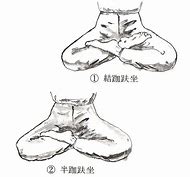
Forcing one’s legs into a lotus position may sound really harsh. Most American teachers that I know encourage their students to sit in ways that work for their body, including in chairs. I personally feel grateful to my teacher for requiring that I learn to sit hankafuza or kekkafuza. If she did not have the faith in me that I could do it, I would not have attempted it. There is something about sitting in a lotus posture that is quite grounding for me and really helps me to focus my attention. But I also understand that this is not for everyone, and I would never force my students to sit in this way. If their body was limber enough, however, then maybe I would encourage it.
While most Western teachers tend to be less rigid when it comes to how you sit, you nonetheless can find yourself sitting in stillness and silence anywhere from 20 minutes to 7 days. This requires anyone to have the ability on some level to let go of picking and choosing. This is how the Great Way becomes easy. When we let go of what we want and learn to accept the situation as it is, peace comes to the mind.
Zen Master Dogen’s “Universal Instructions for Zen Meditation” claim to be universal. Anyone should be able to do it. They only need to follow his instructions carefully, dedicate themselves, and be still. But can his instructions be applied to everyone?
For some people new to Zen, and even those who have been sitting a long time, expecting someone to sit for a long time without moving – regardless of posture – may be inappropriate, especially for those with a history of early childhood trauma, PTSD, or belonging to a marginalized community.
For a trauma survivor having the ability to choose is the pathway to healing. Not allowing choice can actually exacerbate trauma symptoms.
Trauma is defined as, “extreme lack of choice by an individual in a chronic way” (David Emerson, author of Overcoming Trauma Through Yoga). Trauma includes not only having one’s physical body hurt at a particular time, but also systemic forms of violence such as what the African American and Native American communities are presently facing as a result of the historical oppression they continue to experience. The recent “Stand up for Standing Rock” and the “Black Lives Matter” movements serve as testimonies to a systemic form of trauma.
One dimension of trauma that has been well documented in trauma survivors is a poor ability to make choices. Brain scans reveal, among other things, an under stimulated pre-frontal cortex in the brains of trauma survivors. The pre-frontal cortex is where the executive function operates. This is the place in the brain that is stimulated when decisions are made.
People with addictions (addiction often being the by-product of early childhood abuse or systemic trauma), have poor ability to make clear choices. “Just say no”, or asking someone with an addiction history to be self-disciplined may be unrealistic. Repeated lack of choice from an early age, or being constantly denied agency in one’s destiny has prevented the development of the ability to make sound judgements based on necessities or desires.
Part of the path to healing for trauma survivors is having opportunities to make choices, rather than being forced to drop choice.
If a trauma survivor shows up at a Zen center that is not trauma informed, and is told to do things “this way and that way” and to let go of their choosing, they risk having old wounds reopened. Furthermore, a teacher who is not sensitive to how trauma effects a survivor, may, at best, prematurely give up on the student, and at worst, re-traumatize them.
Dr. Judith Herman, author of Trauma and Recovery, writes, “No intervention that takes power away from the survivor can possibly foster her recovery, no matter how much it appears to be in her immediate best interest.” For a survivor, it is deeply hurtful to be told what to do.
That is why, in the context of a trauma informed Zen class, the teacher commits to empowering the students by not telling them what to do. Rather, they use invitational language and offer suggestions. Power is given to the students to decide, based on their own felt experience, what works and does not work for them.
Prior to studying Trauma Center Trauma Sensitive Yoga, as a Zen and Yoga teacher, I pretty much expected that serious students would simply follow what I ask them to do. I assumed that the student was not ready if they could not do what I asked them to do. It was a major bodily and mental shift for me to begin teaching in a way that empowered the students to make decisions for themselves. I clearly remember a palpable shift in my body-center when I gave a student of mine a choice for how to proceed. I was no longer in control of the situation. I was not in control of the student. It was liberating not only for the student, but for me, too!
In the past, because of my lack of understanding around trauma, not being in control would frustrate and seriously aggravate me. I would feel imprisoned. My thoughts were, “Hey! I learned to do this. I learned to drop my own ego. That’s what this practice is about. Why can’t you do it?! Just let go of having an opinion!” Of course, I was not able to verbally articulate this, and I probably wouldn’t have even if I could.
Once I understood that people with trauma are suffering in the present moment because of earlier childhood experiences or systemic forms of trauma that remain lodged in their body, my heart opened up. I realized that it doesn’t do any good to make a survivor conform to my will. The kind response, rather, is to offer opportunities, within the student-teacher relationship, for making choices. I empower the trauma survivor to create their own destiny, as opposed to me trying to shape it for them.
Given the widespread prevalence of trauma [1], my studies of the way trauma effects people have caused me to reflect on the way I teach Zen and the way that I’ve seen it taught in the United States. Is a blanket way of teaching meditation helpful for everyone? Do we know the signs of trauma in our students? Are we truly “liberating all beings” when we are not sensitive to those that come to us with a trauma history? Are we causing more harm than good as Zen teachers when we do not take into account an individual’s trauma, or the trauma caused by systemic forms of trauma (e.g. racism)?
Are we fulfilling our calling to teach the Dharma when we turn away those with trauma? Many Americans have some degree of trauma that goes unnoticed or diagnosed. How do we know, when a student offers resistance to a teaching, that this is because of their own ego? How do we know when a student’s resistance may actually be a sign of their own healing?
The Great Way is not difficult when trauma survivors get to pick and choose. However, for Zen teachers who are insensitive to trauma, the Great Way may be very difficult to teach effectively. Buddhist teachers offer meditation in prisons, mental health units, hospitals, to veterans, and to special needs populations, and to the marginalized. The prevalence of trauma in these circles is even higher than those of the general public. A minimal understanding of how trauma affects neurology, psychology, and community are absolutely essential for Zen teachers.
I learned about trauma thanks to my connection with yoga, and thanks to the encouragement of a friend who is a psychologist. I’m not presently aware of trauma education being offered for Zen teachers, so I feel an imperative to offer some of what I do know.
I have been teaching meditation in prisons for twenty years, and in Behavioral Health and Addiction Treatment centers for seven years. It’s only within the past two years that I have been actively studying trauma, and this has deeply affected how I teach Zen to those populations.
When I’m teaching to individuals that have PTSD I may remind them that it is their choice to be there or not, and if they need to leave for any reason it’s totally okay to return.
By beginning my classes in this way, I am immediately handing my power over to the participants. I’m empowering them to reaffirm their decision to be in the class, and if they change their mind, I see that as part of their healing process. The ability to say, “no” to a person with authority can stimulate healing if the person in power is open and accepting.
If the participants are in prison, then this empowerment through choice is even more precious. They don’t have the choice to leave their larger environment, and often they don’t have choices even within the many activities that they do. By making it clear that they choose to be doing meditation or not, I am letting them know they are in charge, and also not shaming them if they decide to leave.
When I teach meditation, I also incorporate choice into my instructions. While the Buddha’s life, itself, is a model of experimentation to see what works and what does not, this attitude is not clearly reflected in Zen Master Dogen’s, “Universally Recommended Instructions for Zazen”. Depending on the teacher, too, the degree of choices built into meditation instructions may be somewhat limiting for a trauma survivor. For example, Zen teachers often insist on practicing with eyes open. While having eyes open and noticing the external environment may actually be beneficial for addressing trauma, if it is done without choice it may become problematic. I may say something like, “Zen meditation is traditionally done with eyes open. You are welcome to close your eyes or have them open. That’s your choice. Feel free to try both ways and see which works better for you.”
Offering alternatives to posture can also be incorporated into meditation instructions. Students can be encouraged to change postures in the middle of meditation, to move to a chair, to walk, or even to lie down. The point is to allow opportunities for the development of agency, a feeling that one has control over themselves and their environment, and can change how they are relating to the situation. Expecting a survivor to “just sit” and not move does not foster agency unless that person chooses to do so.
Another way I foster agency in a prison setting is to hand the meditation bell over to the students. I ask if anyone would like to be in charge of ringing the bell to start and end meditation. I also have the students decide how long they will sit for. 10 minutes? 20 minutes? This way, they take leadership in their own environment, rather than me telling them a proscribed length of time and expecting them to do it. I am also conscious of the fact that whatever they decide in terms of the length of sitting may not be in their immediate best interest. It may be too long for some, and too short for others. Again, if I’m teaching from an empowerment model, this is not a problem
A trauma informed Zen class may look different from a “normal” Zen meditation group. “Daishu ichi nyo” means “everyone doing the same practice together.” It’s about living in harmony in a cloistered environment. Everyone meditates together when it’s time to meditate. They work together when it’s time to work. They sleep when it’s time to sleep. This is expected of anyone who practices at a Zen temple. To be lying down or doing walking meditation when everyone else is doing sitting meditation, for example, is not the practice of “Daishu.” In a recent meditation retreat I lead, I gave students the opportunity at any time during the sitting period to practice walking meditation, to lie down, or to take a break all together from the group.
While “Daishu ichi nyo” may be absent in a trauma sensitive setting, if the teacher is actively empowering the students to explore different ways of being, then there will remain intact a strong spirit of inquiry which may otherwise be lacking.
I myself am still exploring ways of creating a safe, stable, and transformative atmosphere for practitioners with trauma. The above are just a few examples of what I do, and I’m still very much learning ways of improving my approach, as every student is different.
I am grateful to ALL my teachers for offering ideas and options I would not have been able to see without them.
[1] According statistics found in David Treleaven’s, Trauma-Sensitive Mindfulness, one in five women in the United States will be raped, and it is estimated that every 28 hours a Black person is murdered by police, security guards, or State sanctioned vigilantes.
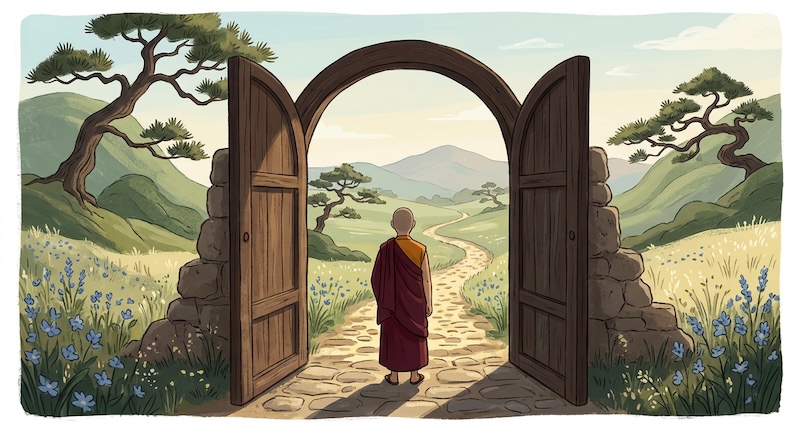
Children taught a struggling teacher to face his ego; when one door closed, a Zen path opened.
Dharma gates are boundless, I vow to enter them.
Children have been by far my best teachers. Jesus said that if we can learn to have the mind of a child, then we will enter the kingdom of heaven. The child’s mind is open, receptive, and sincerely curious about life. When sitting zazen, Dai-En Roshi would encourage us to sit with “kindergarten mind,” a phrase she received from her teacher, Aoyama Roshi.
Upon leaving Japan as a teacher of English, I had a plan to enter graduate school and to pursue a Master’s Degree in Theology. I knew within the first few weeks of study that I was in the wrong place. I felt the need to be working, earning money, and experiencing life, and not thinking about it. I dropped out of graduate school and began working as a substitute teacher for the West Contra Costa School District in California. I was considering becoming a full-time elementary school teacher at that time.
I found substitute teaching exciting because I did not know where I would be going next, or what kind of children I would be teaching. Some of the classes were wonderful, and others were absolutely dreadful. I enjoyed the younger kids much more than the adolescent children.
At the beginning of the summer I returned to the east coast to live with my parents in Maryland. My sister-n-law, Lois, helped me to find full-time work as a teacher in a Catholic school that served children with autism. The work was not bad, but the opportunity arrived for me to work as a 5th grade teacher at another Catholic school in the area. Because I had not yet made a signed commitment to the first school, I abruptly left it to teach at the other school. I later regretted this move because I realized that how I leave one job effects how I enter another job.
I was unprepared to take on two classes of 30 children ten years of age. As much as children can be looked to as examples for developing curiosity, their egos are in full swing. I realized the need, personally, when working with kids, to be able to recognize my own ego, my attachments and aversions, and to be able to drop ego identification frequently. The training in Zen I had done up to that point was not sufficient in addressing this need. I had, after all, spent little time actually training with a Zen teacher, or living in a monastery. The intellectual foundation for practice had been laid by my academic training, but it did not address the down-to-earth practice that I needed to do.
For the five months that I taught the Catholic school children, I came home exhausted everyday. I struggled with holding their attention and getting them to do and behave the way I wanted them to. Yet I was teaching them material from religion and biology, all things I loved. I was not able to convey my love for these subjects in a way that justified my continuation in this work. I spent what I later determined to be too much time disciplining children, and not nearly enough time affirming them. This lesson came at a great price, and thanks to practicing Vipassana with Tara Brach’s meditation group at a Unitarian Universalist church near Washington DC once a week. Because I felt so much better, so restored, after practicing with this group, I made it a point, no matter what, to attend her class every week.
One of the weeks that I attended, Tara had us split off into smaller groups to talk about a Dharma subject. I shared my frustration in working with the children and I received very helpful feedback from my group. I realized that I might not be doing the kids any favors by my demonstrations of anger towards those who were misbehaving. I bought a Dharma talk by Joseph Goldstein that addressed the mental component “fear,” and ways of working with it.
I saw a direct connection between my anger towards misbehaving children, and my own fears of being inadequate to actually directing and having compassion toward children. Determined not to act from a place of anger or fear anymore, I came into the classroom Monday morning with the goal of remaining calm and looking at my own ego attachments in the process of working through my fears.
This worked well for my first class, albeit in a strange way. I decided not to say anything to this class until I could be calm and feel at peace. I waited for their attention without saying a word. I did not realize that I would be waiting for a full 25 minutes to do this, and probably most teachers would not have this patience. As I continued to calm myself, looking at my ego, and my desire to control the kids, the children were busy talking amongst themselves waiting for me to “lose it,” as I had usually done at this time. But I was determined to change, even if that meant losing my job.
I did not care at this point, if I lost my job or not. I was too exhausted to continue teaching in the way that I had been, and felt that if I can not change, then perhaps I should not be working as a teacher. I had nothing to lose in remaining silent and, in effect, waiting for their attention.
After 25 minutes of me standing in front of the class, still, calm, and not speaking, all of the children, to a tee, noticed that I was waiting for them. They had been expecting me to discipline them as I had been ineffectively doing. I managed to trick them by not behaving in my usual pattern. They noticed the change and all of them stopped speaking and began looking at me in wonder. The silence was palpable. The kids were wondering, “is he going to reprimand us?” I could see it on their faces. They were anticipating my disciplinarian action.
Instead, I began with the lesson, asking them to take out their books and turn to a certain page. They seemed somewhat disappointed and perplexed not to see more drama on my part. But they paid marvelous attention during the last part of the period, attending to their work, without complaint or question. It was beautiful. I could not have asked for a better outcome. I had found the secret to working with kids: patience with myself.
I decided to use the same strategy for the next class. I had high hopes. Anxiety was running through my veins with the same kind of anticipation that accompanied me before a swim a race. I did not realize, however, that the previous class would tell the children in the next class about my plans. This class was a different kind of beast all together. I waited even longer, almost 45 minutes, without saying a thing, and nothing of note happened other than the kids continuing to talk without giving me an ounce of their attention. One child, in fact, decided to leave the class at this time to let the principal of the school know what I was doing.
Upon reflection, I could see how my own karma was ripening. I had lost the trust of these children long ago. They had not forgiven or forgotten how I had been treating them, and they seemed determined in making me pay for my mistakes. I was now beginning to feel like the children I had sent to the principal’s office for punishment. The only difference was that instead of me going to the principal, the principal was coming to me.
I felt as if I had completely failed in my objectives. My peace of mind was nowhere to be found as I contemplated what to do next. What would the principal say about this? What would he think about me? How can I explain myself? I felt very stuck.
The principal entered the classroom and sat down in one of the desks in the middle of the room. The whole class was quiet. I picked up on their quiet and began the lesson as if nothing prior had happened. Somewhat defeated, acting as though I planned all of this, but on another level knowing something was wrong, I walked through the rest of the day wondering what would be the result of all this, and how to explain my actions.
It dawned on me that I needed, rather than punishing the “bad” kids, to reward the “good” kids. Tuesday of the same week I instituted a reward system where I gave tickets to the kids who were, “caught being good.” They could cash in the tickets for prizes that were to be determined. I found, hands down, that this had more consistent results then my experiments with silence. I was now actively seeking out the children that were behaving, and actively ignoring the kids that were being rude. This shift of focus was noticed by the children. They changed. Even the “bad” kids began to consider how they could be, “caught being good.”
I felt that, thanks to my experiments with silence, I was able to see the need and implementation of a reward system. I had effectively taken control over this class. It took me a grueling five months of struggle with myself to come to this place, but I did it. The one thing that was worrying me, however, was the principal. Since that fateful day when he had come into my class I had not heard a word from him.
Friday afternoon of that week he called me into his office. It was during a break before my last class. The principal asked me to resign. He told me that he had found my replacement, and that the incident that Monday morning convinced him I was unable to control the class.
I was speechless. I did not know how to respond. I did not want to resign. Why?! I tried to explain feebly how I had finally gained control of the class. It was too late though. He asked me to tell the kids that I would be leaving after today. That was the end of it.
Thrust into a maelstrom of confusion and anger I proceeded to return to my class. I had about 15 minutes before the children would be arriving for their last period with me. Not knowing exactly how to conduct the class, I hinted at my departure by talking about how all things change, and ended with a sincere prayer straight from my heart saying, “Sometimes we feel lost and confused in this world. It’s at these times that we can look to God and cry out, ‘God, help me. What should I do? Where should I go?’”
The children knew what I was talking about. They could not say it directly, but they knew. Some looked at me quite seriously and understood that a big change was about to happen. I did not need nor feel obliged to say more. The only thought that came to mind after the prayer was to visit that teacher (Dai-En Roshi) up in Pennsylvania who was trying to start a Zen monastery. What did I have to lose at this point? I had no job, no girlfriend, and no children to take care of. If I was going to study and practice Zen for real, this would be the time to do it. I would learn what I had not learned while practicing by myself. I would learn how to really practice and teach meditation.
What these children taught me was the importance of not trying to control anyone. They showed me how controlling I was, they shined back to me my own anger and delusion. They taught me, too, that I needed to learn how to control myself. Three years of meditating mostly on my own was insufficient to work through these issues. I needed a teacher to work with at this point, to show me how to meditate, and to show me how a teacher conducts him/herself in daily activities. Though the way I was treated by the principal reflected his own weaknesses, what turned out to be a loss in this world enabled me to more fully study, practice and eventually teach the Dharma. One Dharma gate had closed and another Dharma gate had opened.
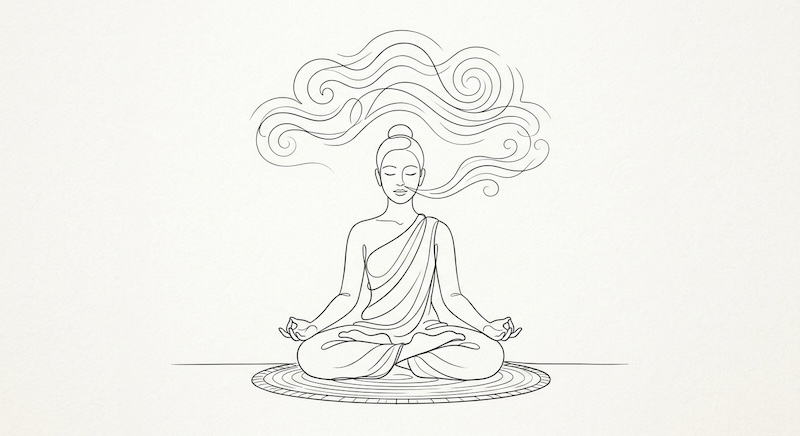
Zen sees mind and body as one; breath calms both and reveals how everything is connected.
In our culture there is a major split between mind and body. Generally speaking, the body gets treated one way and the mind another. We go to a gym to develop our body. We go to a classroom to develop our mind. The body is considered physical: muscle, bones, ligaments, organs. The mind is generally located in the head, associated with thoughts, and considered superior to the body. But these two things – mind and body – are not separate, and treating them that way has created a dislocation between our thoughts and reality.
Breath brings body and mind back together so our thoughts are more in alignment with reality. We can learn a lot about the body and mind from Zen Buddhism. In Buddhism, breath is referred to as the royal road connecting mind and body. According to Zen, there is no body separate from mind, and mind is not located only in the head. When someone from Japan says, “I’m thinking,” they point to their heart. So where is our mind?
One perspective – the teachings of Totality as found in the Flower Ornament Sutra – states that mind is in every cell of the body. Every cell of your body carries memory. This is why therapy that is based only on changing thinking patterns is often not enough for trauma patients or victims of abuse and violence. The violence to which a person is exposed is carried in the muscles in addition to his or her thoughts and consciousness. Asanas are powerful because they can, if done with compassion, help someone learn ways to gently hold the pain they are experiencing, rather than repressing it in a self-destructive way, or expressing it in an other-destructive way.
Filling the body with breath and then releasing the breath through asana practice is a way to touch the pain within us and to acknowledge its presence in a loving way. It does not guarantee the ending of or releasing of that pain, though much of the pain we hold on to is not caused by the pain itself but by the very fear of having or experiencing that pain. So in touching the pain with our awareness we greatly reduce its intensity.
In Buddhism we are admonished to practice the Dharma for the sake of the Dharma. In other words, practice without looking for the benefits – just practice. Asana practice is also like this. Just do the asanas without hoping for anything at all. At the same time, I have found it inspiring to know the great benefits that come from meditating and yoga – reducing stress and chronic pain, boosting the immune system, coping with painful life events, working with negative emotions, improving concentration, etc – and they help me to keep at it.
In Zen practice we first use the breath to regulate mind and body. We calm the body and mind with the breath. This is the first half of the practice. Once calm, we can begin looking into how everything is connected to everything else. This is the second half of the practice. The breath is used to calm us down so that we can gain insight into Buddhist teachings on emptiness, the teaching that there is no separate self that exists apart from anything else.
A Zen priest’s six-year path shows you can do anything if you’re willing to pay the price.
“You can do anything you want in your life, but you have to know the price for it and be willing to pay it.” -Mrs. Featherston
“You can do anything you want in your life, but you have to know the price for it and be willing to pay it.” -Mrs. Featherston
The town eccentric, Mrs. Featherston, wore bright, flowing gypsy skirts and Converse high top shoes because of her hammer toes. She lived just on the edge of town before the Lewisburg Bridge crosses over the Susquehanna River. The house where she resided is now referred to as Packard House and it became a museum filled with all the clothes and artifacts she and her husband collected on their world-wide travels. Lewisburg is a small rural town in central Pennsylvania, noted for Bucknell University and the Federal Penitentiary. It is also the hometown of my teacher, Patricia Dai-En Bennage Roshi.
As a little girl, Patricia was taking a walk with her mother, Evelyn, in town one day when they met Mrs. Featherston on the way. Mrs. Featherston bent over and looked deeply and earnestly into Patricia’s eyes saying, “Hello Patty,” patting her on the head with one hand, then straightening back up and walking on.
After this brief encounter she asked her mother, “How is it that Mrs. Featherston can say one thing with her mouth and another thing with her eyes?”
Evelyn responded, “I have no idea what you mean, Honey.”
Dai-En Roshi remembers in retrospect what she thought Mrs. Featherston said with her eyes: “You can do anything you want with your life, but you have to know the price for it and be willing to pay it.”
Zen is simple, Dai-En Roshi would often say. “The way of the world is to, ‘Fly now and pay later.’ But the way of Zen is to ‘Pay now and fly later.’ We need to be willing to pay the price for what we want to do.”
Dai-En Roshi shared this story with me when I first came to Mount Equity Zendo as a 24 year–old young man. This was her way of talking about the need for practitioners to build resolve. We really need to want Enlightenment, to cultivate the mind that seeks after it, knowing that anything less than this mind will hinder us on the path. “Hotsubodaishin,” the heart/mind that seeks The Way, Enlightenment, Truth, is the cornerstone of Zen practice. My teacher planted a seed in my mind, suggesting ordination as a Buddhist monk as a pathway. This seemed like a scary prospect. Could I do it? What would my family think? What would society think? Is this what I really want to do? What would I need to ‘pay’ in order to ‘fly’?
My answer to those questions was found in the process of building resolve, a process that was, for me, six years in the making, and of daily living and practicing at Mount Equity Zendo. What I wanted did not come easily. Though she offered it as a road, Dai-En Roshi felt I was too young at 24 to ordain. She had me wait in order that my resolve be deepened. At the time, I had no idea how long I would need to wait. There was no timeline put on it. When I saw that my fellow Dharma sister was being ordained after one year, I got the gumption to ask my teacher if I could ordain as well. She said, “No, I don’t want you ordaining just because someone else is ordaining. Besides, she is much older than you and has considerable Zen practice and life experience.”
At the time, I didn’t think that I was asking because of my Dharma sister, but her ceremony certainly made me wonder when I could ordain, and initiated the conversation. Her “no” response sent me into a tailspin for the next several weeks which initially deepened my confusion as to whether I was in the right place or not. I decided, however, to stay put, and resolved, more deeply, to simply do the practice for the sake of the practice, without trying to become a monk, priest, or venerable person.
The years that followed allowed me to really consider what practice is and to let go of unhelpful notions about what constitutes a Buddhist priest. Perhaps the most transformative thing I did during this time was zazen, and – at my teacher’s insistence – work as a certified nurse’s aide at the nearby nursing home. I’d return to Mount Equity Zendo after an eight hour shift saying, “NiOsho [‘NiOsho’ means ‘female head of temple’ and is what Dai-En Roshi is referred to by her students], I’m so lucky–I can swallow!; I can dress myself and clean myself!” While most of my work was with elderly residents, there were also three young men I tended to, only in their thirties, all of them paralyzed from accidents. I realized the preciousness of the most simple functions, and how easy it is to overlook them when our mind is preoccupied with unhelpful notions of success.
Between zazen and work as a nurse’s aide I was able to see through the labels that society or I gave to me and to honor “the man of no rank” within myself. Society feeds us with ideas about what it means to be prosperous. Having a certain number of degrees, being a professional – a doctor, lawyer, chaplain, etc – can mask our vulnerability to being born human, and delay us from witnessing the True Self, the one not bound by hierarchical levels, the one that is the All. This is not a condemnation of levels and positions, but merely a recognition of how limiting they can be when we identify with them as our self.
The six years of living in this way at Mount Equity Zendo formed a solid foundation for which I am now grateful. For in that time I was able to let go of the idea of even wanting to be a priest. I was able to end my grasping after something that was not me. I was able to find satisfaction in who I am, without the need for a label or a person to affirm me. Shortly after I came to the conclusion that I am fine just as I am, my teacher asked me if I wanted to ordain. I had recently had my 30th birthday and she felt I had reached a level of maturity to make this decision on my own.
Having let go of my desires for becoming a monk was, paradoxically the doorway into being a Buddhist monk. Let me say, however, that I found the thought of letting go not the same thing as the actual doing of it. Simply knowing I needed to “let go” was not enough. Letting go is not an intellectual process, but a fundamental change that occurs on the deepest level of mind and body. It can be triggered gradually, suddenly, or both gradually and suddenly. The price I paid was six years of daily introspection through zazen, Dharma study, manual labor, serving the infirm, and working hard to understand and communicate with my teacher.
Shortly after Dai-En Roshi’s 15 years of training in Japanese Zen monasteries she returned to the United States in 1990 to teach. A friend from Nagoya, Japan was visiting her at the time, and she decided to take her friend sight–seeing around her home town. Her tour included the Packard House in Lewisburg. While inside the gift shop she inquired about Mrs. Featherston and was told, “Well, you know, in her old age, even though she had those hammer toes and was long widowed, she went in a wheelchair on her long dreamed–of visit to, of all places, Tibet.” Upon hearing this story, Dai-En Roshi reflected upon the message she held in Mrs. Featherston’s eyes as a young girl. “You can do anything you want, but you have to know the price and be willing to pay it.”
The foundation for the work for me to be a Zen priest was the resolve that I built up over six years as a lay student. I want to be a Zen priest! I can, indeed, do anything I want! I honor Old Mrs. Featherston, a lady whose eyes I have met.
Daishin Eric McCabe met his teacher, Dai-En Bennage Roshi, in 1994 at Bucknell University in central Pennsylvania while studying Religion and Biology. He began his 15 year residency and mentorship with her at Mount Equity Zendo in 1998 and completed Zuise in 2009. He is a present member of the Board of the Soto Zen Buddhist Association, a member of the Association of Soto Zen Buddhists and has recently completed a one year Clinical Pastoral Education training program. In August of 2014 he moved to Ames, Iowa with his wife, Jisho Sara Siebert. This article is an excerpt from a book he is writing. To learn more, visit him on the web at: www.zenfields.org.
(This post was published in “Ancient Way” magazine which can be found at: http://dharmalight.weebly.com/)